
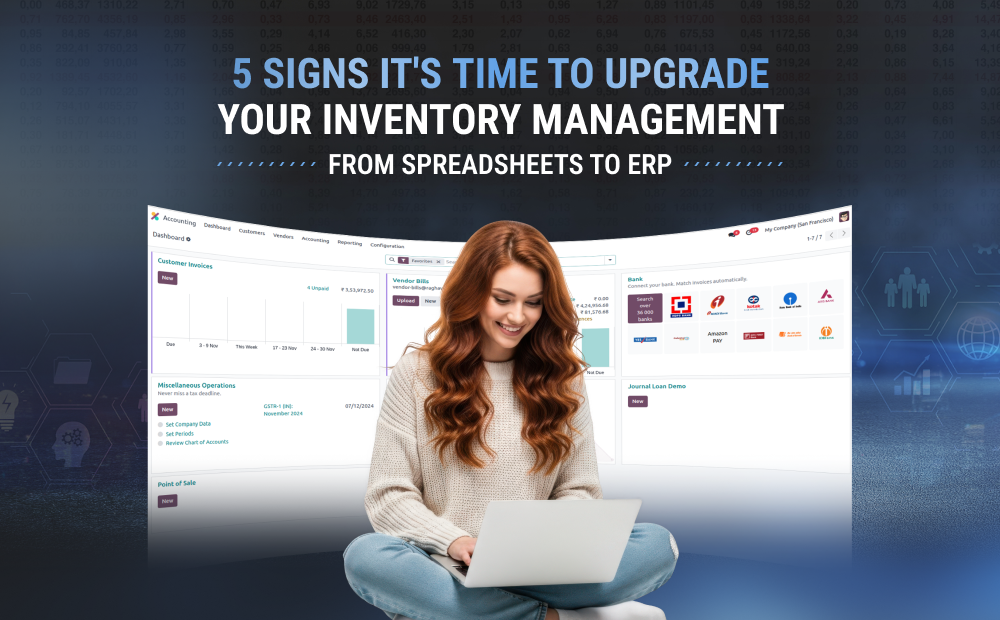
Inventory is the heartbeat of every product-centric business. Whether you’re running a manufacturing unit, retail chain, or e-commerce brand, efficient stock management directly impacts your ability to meet market demand, control operational costs, and drive profitability. But many companies cling to spreadsheets long after they’ve outgrown them—spending hours on manual updates that could be automated. While spreadsheets are a low-barrier entry point (familiar and free to start), research shows they become a liability as businesses scale. According to a University of Hawaii study, 88% of spreadsheets contain errors, leading to costly mistakes like stockouts or overstocking. A UK firm, TransAlta, lost $24 million in 2003 due to a spreadsheet error in procurement calculations. In contrast, ERP systems centralize data, automate processes, and provide real-time visibility—reducing errors by up to 90% and boosting efficiency. If your team is wasting time on Excel fixes or facing frequent inventory issues, it might be time to make the switch. Let’s explore the key signs
Operational Risks of Staying on Spreadsheets
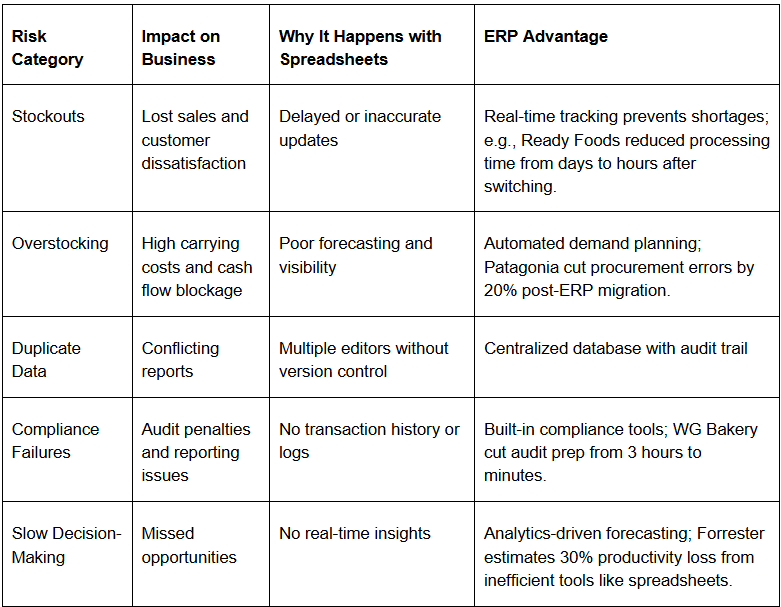
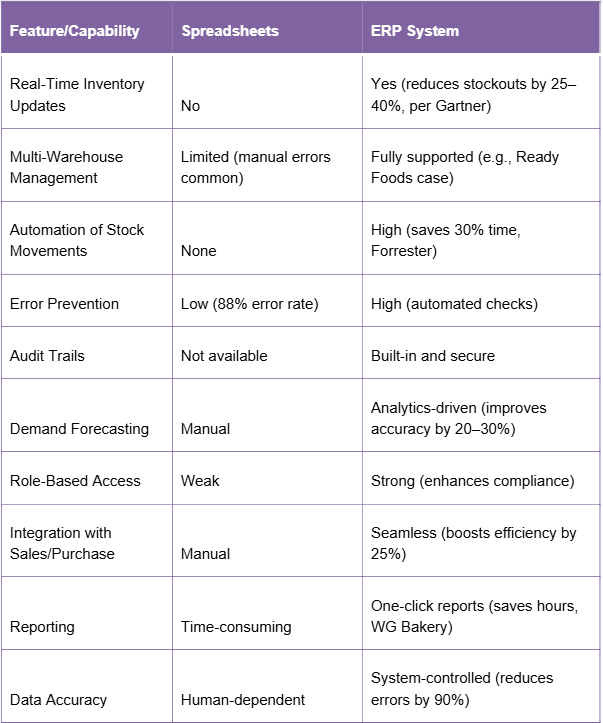
Sticking with spreadsheets exposes your business to avoidable risks. Comparative research shows that while Excel offers basic tracking, it lacks automation, leading to human errors in 88% of files. ERP systems, on the other hand, integrate real-time updates and reduce these risks through built-in controls. Here’s a quick comparison:
1.Spreadsheets Can No Longer Keep Up With the Complexity of Your Inventory
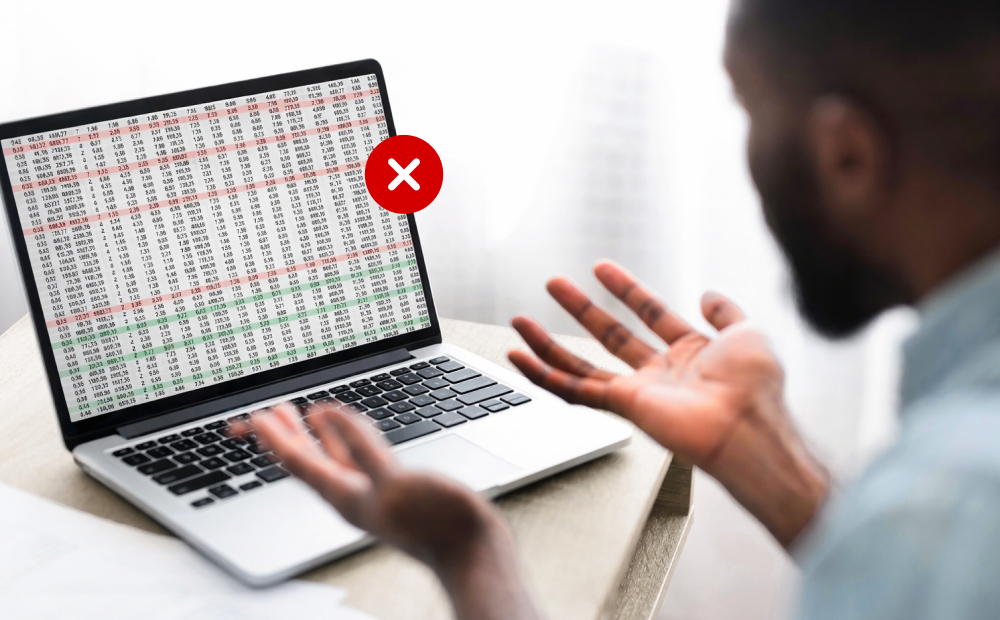
Spreadsheets feel sufficient in the early days. But as your operations grow, your inventory data becomes far more complex. A simple color/size variation turns into endless rows, leading to data silos. You will spend more time than needed creating a new product for every color and size, which is extremely repetitive.
Take Cave Direct, a UK craft beer importer—they switched to ERP after spreadsheets caused outdated data and operational delays, reducing inventory by 30%. ERPs handle variants automatically, freeing teams for strategic tasks.
2. You Experience Frequent Stockouts, Overselling, or Over-Purchasing
Overstocking hurts cash flow. Stockouts and overselling hurt sales. Over-purchasing leads to wastage. All three signal that your inventory numbers are unreliable. Unlike ERP, spreadsheets don’t update automatically.
If five people sell the same product but only one updates the spreadsheet on time, you get:-
- Emergency rush orders
- Collisions between sales and fulfilment
- Incorrect availability
BTM Industries saw a 30% revenue boost after ERP implementation for real-time tracking. Spreadsheets don’t auto-update; ERPs integrate sales/inventory for accurate forecasting.
3. You cannot Track Inventory in Real Time Across Locations
The moment your business expands beyond a single warehouse, spreadsheets fail. Even when stock arrives or returns are processed, outdated systems such as spreadsheets often fail to reflect these changes instantly. Real-time tracking is essential for improving delivery time and minimizing stockouts.
Unfortunately, spreadsheets don’t offer real-time insight. Without real-time insight:-
- Customers see “in stock” items that are actually unavailable
- Warehouse teams face last-minute rushes or find missing items
- Sales teams commit to delivery without knowing the actual availability
- Procurement orders materials too late or too early
ERPs provide instant visibility, preventing stockouts and improving delivery (up to 20% faster batch turnaround, per Mar-Kov case).
4. Reporting, Compliance, and Financial Reconciliation Are Becoming Overwhelming
As your business handles more stock, transactions, and operational complexity, spreadsheets turn routine reporting into a major operational burden. it’s a clear sign that spreadsheets are no longer serving your business. Inventory is tied directly to financials—valuation, costing, margins, and write-offs. Spreadsheets make these tasks difficult.
For finance, unreliable spreadsheets cause:-
- Incorrect inventory valuation
- Confusing or incomplete records
- Wrong COGS calculations
- Misaligned P&L statements
WG Bakery reduced audit prep from 3 hours to minutes with ERP. ERPs automate valuation/COGS (reducing errors by 90%), with audit logs for compliance.
5. Forecasting and Inventory Planning Have Become Guesswork
Modern inventory planning requires analyzing patterns, customer behaviour, market fluctuations, and supplier consistency. If your forecasting currently involves looking at old spreadsheets and guessing based on previous months, you are leaving efficiency.
Poor Forecasting Leads to Serious Losses:-
- Guess-based planning creates problems such as:
- Excess capital trapped in inventory
- Frustrated customers and delayed deliveries
- Emergency purchases with higher costs
- Stocking out of bestsellers
- Rising holding costs
Spreadsheets lack analytics; ERPs use AI-driven insights for precise demand planning, cutting waste by 30% in cases like BTM Industries.
Spreadsheets vs ERP – Inventory Management Capabilities
Conclusion: Don’t Let Spreadsheets Hold You Back
Inventory management is too important to rely on outdated tools. Spreadsheets may have carried you through the early days, but they are not designed for complexity. If your business has outgrown spreadsheets, ERP is the upgrade that unlocks your potential. It seems like every business reaches a point where spreadsheets become a barrier rather than a tool.
If you’re experiencing: Frequent errors, Slow reporting, Lost visibility, Manual work overload, Warehouse confusion, Poor forecasting, Operational delays, Data inconsistencies or you recognize even one of the five signs discussed above in this blog, its time to upgrade.
ERP provides better clarity, automation, and real-time updates that spreadsheets cannot offer. It streamlines processes and supports business growth. At Confianz, we help businesses smoothly transition to ERP systems, enabling improved visibility, efficiency, and scalability.
Ready to upgrade from spreadsheets to ERP?
Confianz helps businesses implement ERP solutions that improve inventory visibility, automation, and efficiency. Contact our experts to get started.