


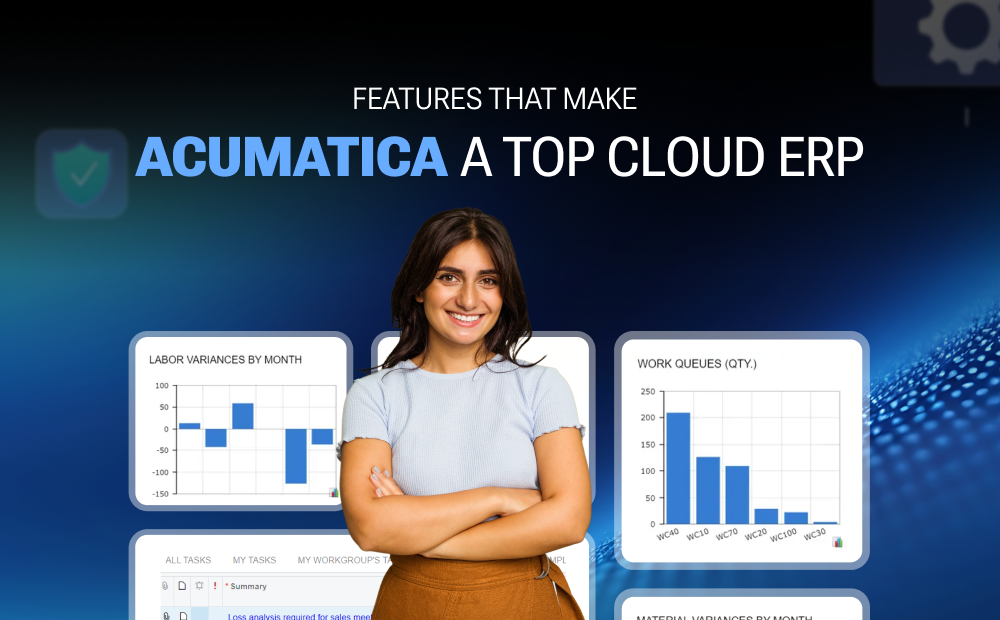
Choosing an ERP solution is critical to maximize your organizational success and unlock your company’s potential. Traditional ERP systems restrict growth with rigid structures and escalating costs. Acumatica has emerged as one of the most robust and modern cloud ERP platforms, especially for mid-sized businesses seeking flexibility, scalability, and advanced features. It goes beyond just offering accounting and inventory tools; Acumatica integrates business operations in a way that drives real-time decision-making and operational efficiency.
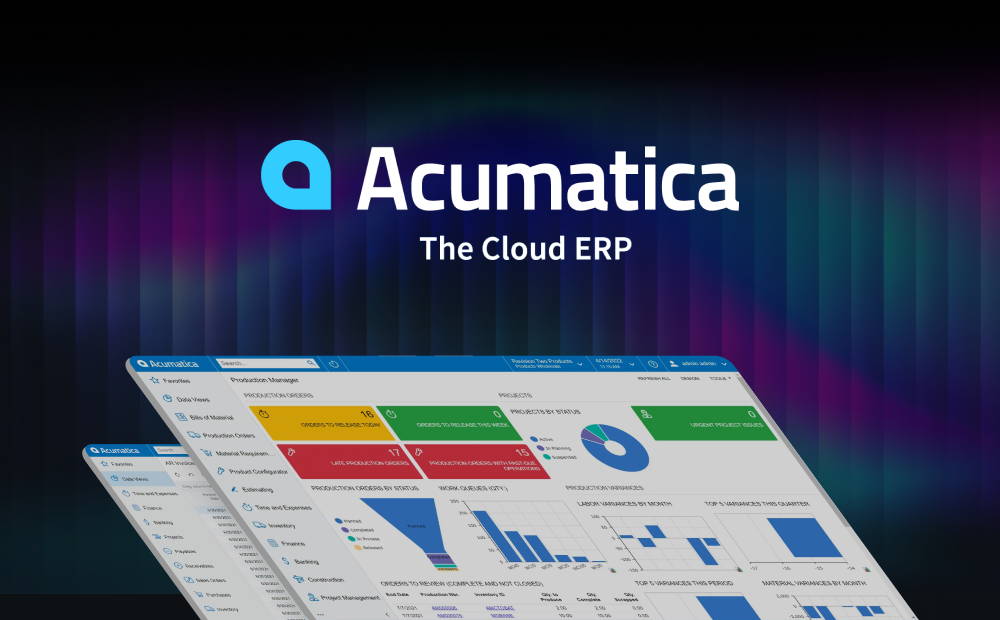
Key Features of Acumatica
1. True Cloud Architecture
Acumatica’s cloud-native architecture (built on .NET and Microsoft stack) allows deployment on public or private clouds, with seamless browser access and no client installation required. Unlike many legacy ERPs that were later cloud-enabled, Acumatica was born in the cloud. This ensures better scalability, performance, and mobile accessibility.
Comparative Note: Some ERPs like NetSuite or SAP Business One offer cloud versions, but they still exhibit some limitations in customization and flexibility. Acumatica, with its open APIs and robust customization engine, outperforms them in adaptability and developer friendliness.
2. Modern API and Integration Capabilities
Acumatica offers a complete REST and SOAP API set, allowing seamless integration with third-party tools (e.g., Power BI, Shopify, Salesforce). The integration is not just surface-level; it allows full CRUD operations and complex business logic exposure.
Technical Edge: Developers can build integrations or automate workflows using webhooks, OData, and custom endpoints, giving Acumatica a technical edge over platforms that rely on proprietary or restricted APIs.
3. Flexible Licensing and Unlimited Users
One of the unique propositions of Acumatica is its resource-based licensing model. Unlike traditional ERPs that charge per user, Acumatica allows unlimited users without increasing the licensing cost. This facilitates collaboration across departments without budgeting constraints.
Industry Comparison: Platforms like Microsoft Dynamics 365 or Oracle NetSuite still follow user-based licensing, which becomes expensive for growing businesses.
4. Real-Time Dashboards and Analytics
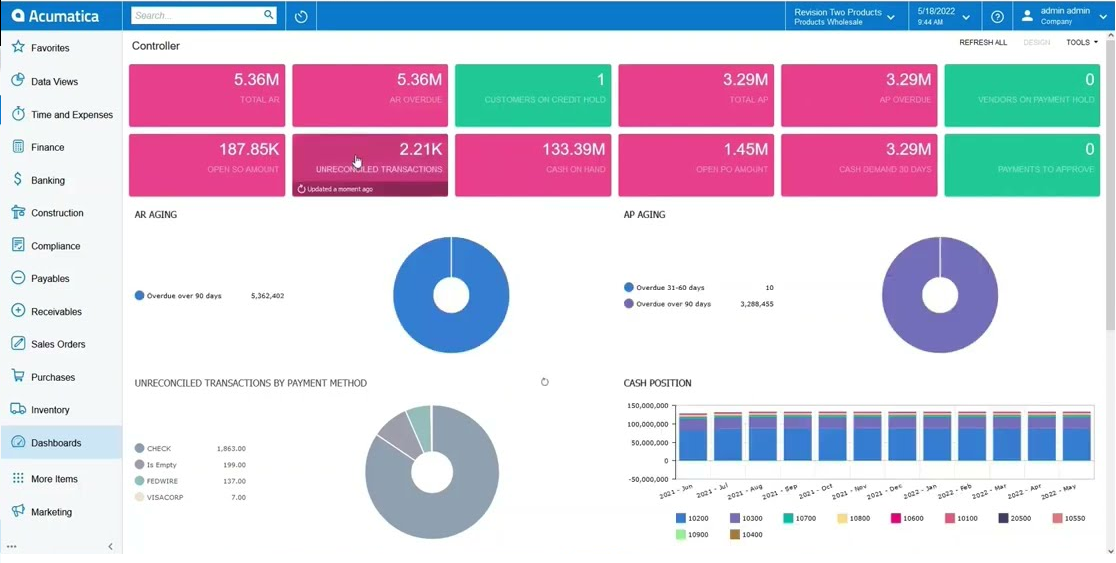
Acumatica provides customizable dashboards and real-time KPIs using native reporting tools and integration with Power BI. Its reporting engine supports ARM (Analytical Report Manager), GI (Generic Inquiries), and pivot tables, enabling users to build deep insights without relying on external BI software.
Tech Highlight: Acumatica’s built-in data visualization supports conditional formatting, widget linking, and cross-module insights—features often missing in traditional ERP reports.
5. Mobile Accessibility with Offline Sync
Acumatica’s mobile app supports field operations, approvals, expense entry, and time tracking – complete with offline capabilities. Users can work in disconnected environments (e.g., field service, construction sites), and data syncs automatically when a connection is restored.
Competitor Comparison: While other ERPs offer mobile access, Acumatica’s offline sync and native mobile customization (via Xamarin) are superior.
6. Industry-Specific Editions
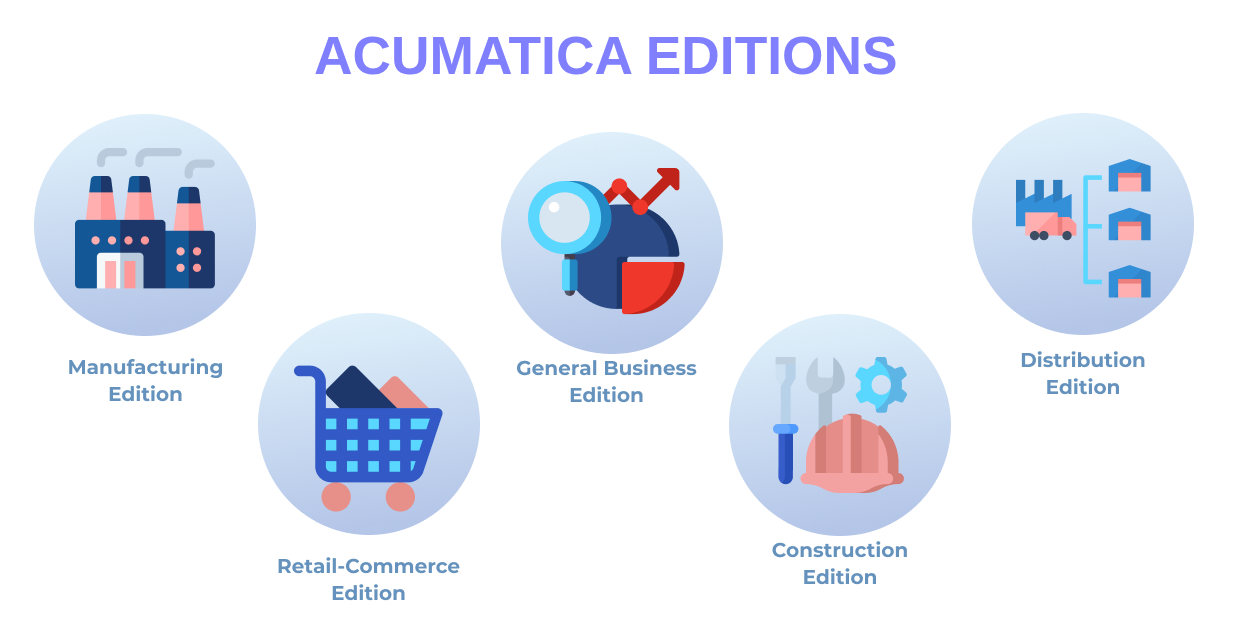
Acumatica provides tailored editions for manufacturing, construction, distribution, and retail. These editions are not just superficial – each includes domain-specific workflows, dashboards, and reporting suites.
Value Add: Compared to general-purpose ERP systems, Acumatica delivers more ready-to-use templates and workflows, reducing implementation time and cost.
7. AI and Machine Learning Capabilities
Acumatica continues to add AI-driven features like automated AP document recognition, smart expense capture, and anomaly detection. These intelligent tools reduce manual work and increase data accuracy.
Comparative Insight: While most mid-market ERPs are catching up with AI, Acumatica already offers practical, working implementations—especially in finance and document automation.
Final Thoughts
Acumatica’s open, flexible, and modern technology stack makes it a top contender in the cloud ERP landscape. While many ERP systems are gradually moving toward the cloud, Acumatica has not only set the benchmark but has done so with technical superiority, integration simplicity, and user-focused licensing.
For companies evaluating ERP solutions, Acumatica combines ease of use with deep technical capabilities – making it a better long-term investment than legacy or rigid cloud ERP systems.
Talk to our experts now
Related posts:
 Why Does Your Business Need a Customer Relationship Management Mobile Application?
 Acumatica vs NetSuite – Which is Right for Your Business?
 Features That Make Acumatica a Leading Cloud ERP Software
 Why You Need to Invest in Industry-Specific ERP Solutions Like Acumatica Cloud ERP?
 QuickBooks to Acumatica Migration: 5 Compelling Reasons to Make the Switch