

Mobile applications have become one of the most powerful tools for businesses to engage customers, streamline operations, and unlock new revenue streams. From healthcare and education to marketplaces and ecommerce, mobile apps now play a central role in digital transformation.
Latest 2026 market snapshot:
- Global consumer spending via in-app purchases on mobile apps reached $270 billion in 2025 (Sensor Tower), with non-gaming apps surpassing games for the first time.
- The overall global mobile application market is projected to grow from approximately $378 billion in 2026 to $626.39 billion by 2030 at a CAGR of 14.3% (Grand View Research).
- The market is expected to surpass $1 trillion by 2035.
However, building a successful mobile application requires more than just a great idea. It demands structured planning, strong user experience, reliable technology, and a disciplined development process.
Why a Structured App Development Process Matters
Many businesses start app development with excitement but without a clear roadmap. This often leads to delays, budget overruns, and products that fail to meet user expectations.
Critical statistics (2026):
- 70% of app projects fail before launch due to misaligned expectations and poor market validation.(foresightmobile)
- 25% of apps are used only once after installation; 71% of users churn within 90 days.(Stivecloud)
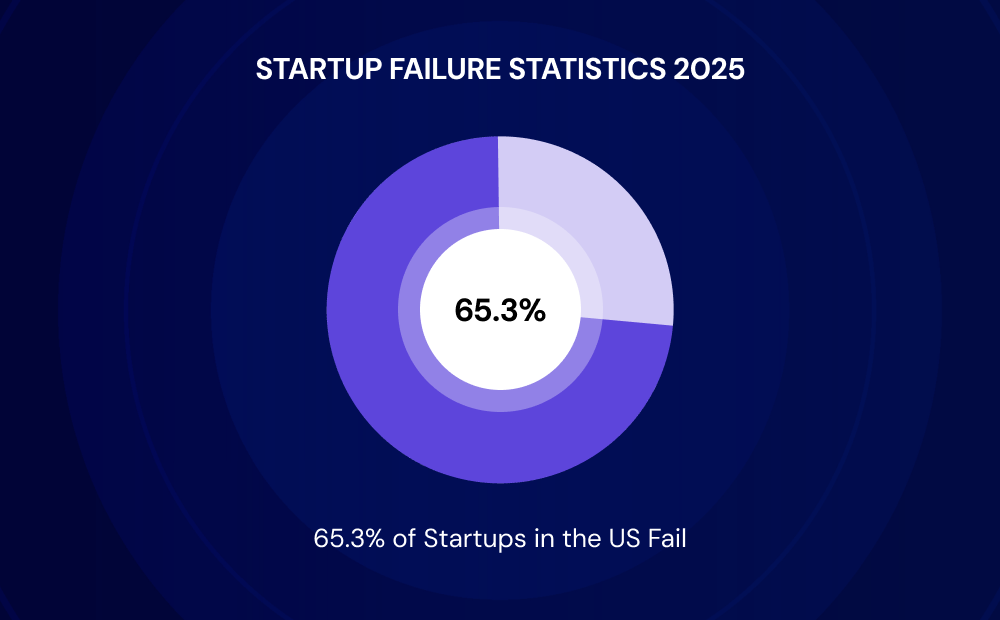
Startup Failure Statistics 2025(joingenius.com)
A structured development approach ensures:
- Clear business goals
- Strong product-market fit
- Efficient development cycles
- Secure and scalable architecture
- Faster time to market
Organizations that adopt a structured process significantly increase their chances of launching a successful digital product.
Confianz has successfully delivered mobile and web applications across industries including healthcare, ecommerce, education, legal services, and digital marketplaces, building scalable, user-centric platforms that solve real business challenges.
The 8 Key Steps of Mobile App Development
Below is the structured 8-step development framework that transforms ideas into successful mobile applications.
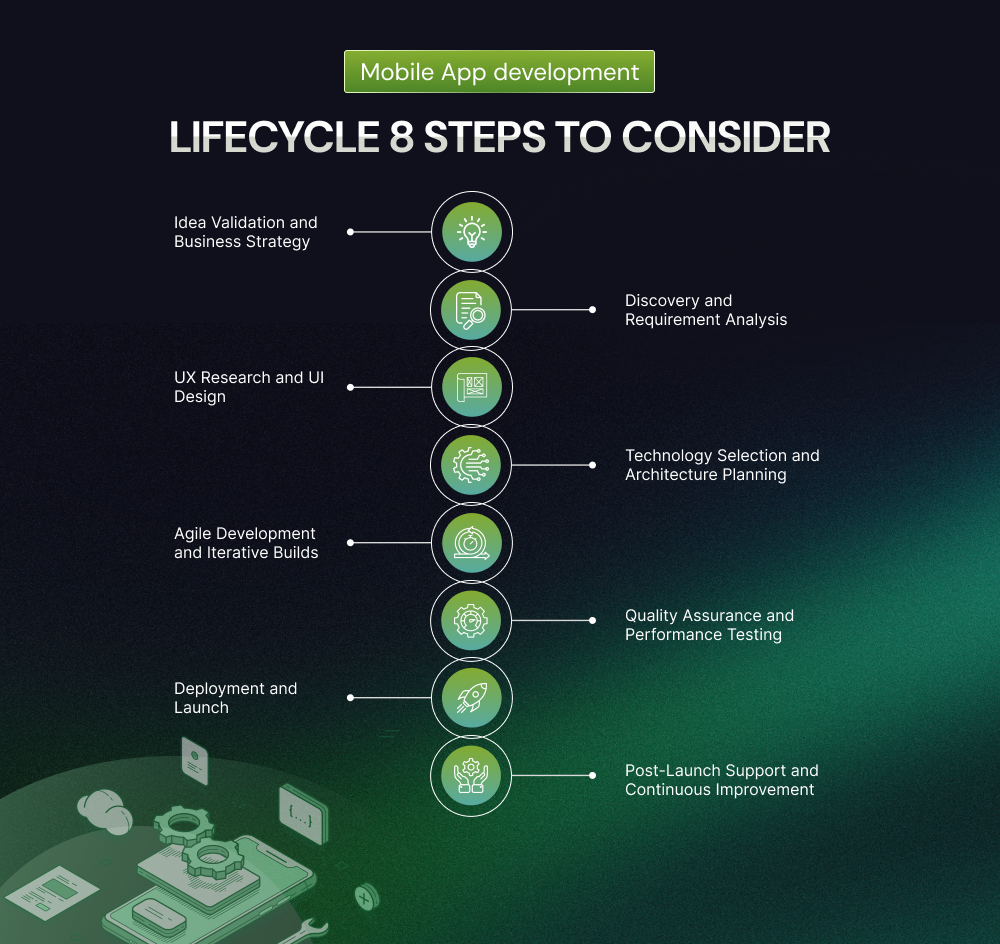
Idea Validation and Business Strategy
Every successful app begins with a clearly defined business objective. Before development starts, businesses must evaluate:
- What problem the app solves ?
- Who the target users are ?
- How the product will generate value ?
- What differentiates the app from competitors ?
This stage often includes market research, competitor analysis, and feasibility studies to validate the idea.
Discovery and Requirement Analysis
Once the concept is validated, the next step is to define detailed requirements and user journeys.
Key activities include:
- Stakeholder workshops
- Feature prioritization
- User persona development
- Technical feasibility evaluation
- Product roadmap planning
This stage ensures alignment between business goals, technical capabilities, and user expectations. At Confianz begins projects with collaborative discovery sessions to understand vision, workflows and BRD/PRD preparation.
UX Research and UI Design
User experience is one of the most important factors in the success of a mobile application. Research shows that 88% of users are less likely to return to an app after a poor user experience. (WifiTalent)
UX design focuses on:
- User journeys and task flows
- Information architecture
- Wireframes and prototypes
- Visual design and branding
At this stage, designers create interactive prototypes that simulate how the app will function. Confianz uses AI-assisted design and usability insights to create intuitive, user-centric interfaces that drive engagement and retention.
Technology Selection and Architecture Planning
Choosing the right technology stack is critical for scalability, performance, and long-term maintainability.
Common mobile development technologies include:
- Flutter (46% adoption) and React Native (35–38%) for cross-platform apps – the two dominant frameworks in 2026
- Native iOS and Android development for high-performance applications
- Cloud platforms like AWS, Digital Ocean or Azure for scalable infrastructure

Confianz works with modern technology stacks including Flutter, React Native, React, Node.js, and cloud-native platforms to build reliable web and mobile applications.
Agile Development and Iterative Builds
Once design and architecture are finalized, the development phase begins. Most modern mobile products are built using Agile development methodologies.
Key Agile statistic: 75.4% of Agile projects succeed (vs. lower rates for traditional methods). Agile delivers faster time-to-market, better adaptability, and higher customer satisfaction.
This stage includes:
- Backend development
- Mobile app development
- API integrations
- Feature iterations
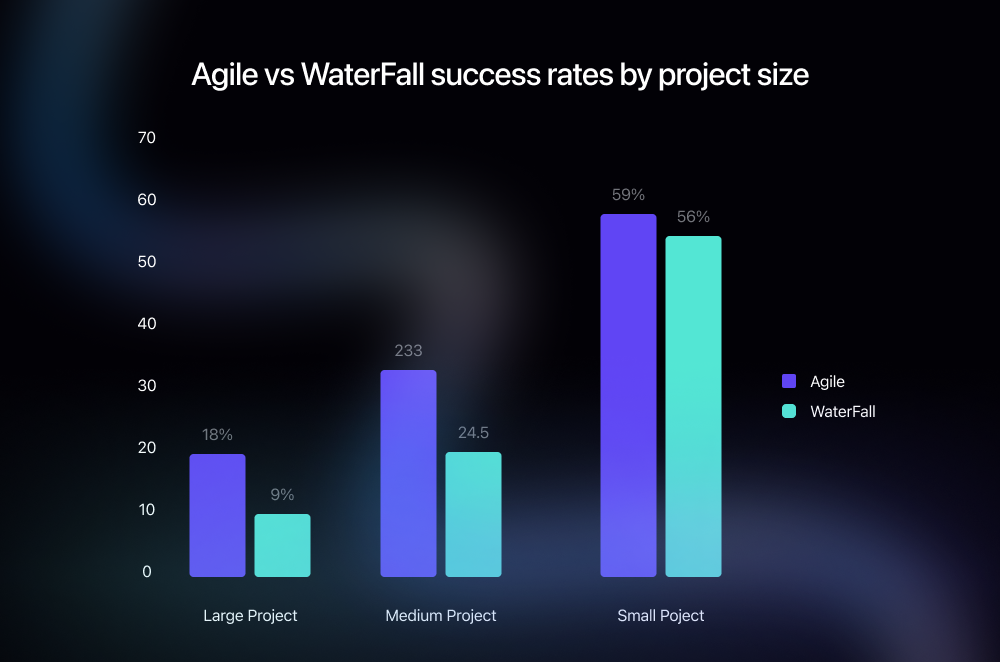
Confianz follows an agile, iterative development model supported by AI-assisted tools to accelerate delivery while maintaining code quality.
Quality Assurance and Performance Testing
Before launch, every application undergoes extensive testing to ensure reliability and security.
Testing includes:
- Functional testing
- Performance testing
- Security validation
- Device compatibility testing
- User acceptance testing (UAT)
Quality and security are integrated into every development stage through code reviews, automated testing, and secure coding practices.
Deployment and Launch
After successful testing, the app is prepared for deployment to app stores.
Launch preparation includes:
- App Store and Google Play submission
- Performance optimization
- Final security checks
- Launch marketing strategy
Proper launch planning ensures the application is discoverable and performs smoothly from day one.
Post-Launch Support and Continuous Improvement
Launching the app is only the beginning.
Successful apps continuously evolve based on user feedback, analytics, and market changes.
Post-launch services often include:
- Feature enhancements
- Security updates
- Performance monitoring
- User behavior analytics
Confianz provides ongoing support and maintenance to help businesses scale their digital products and maintain long-term reliability.
Real-World Success: Turning Ideas into Impact
A structured development approach has helped many businesses successfully launch digital products.
For example:
- A healthcare platform built by Confianz enabled members to access policy information, track claims, and locate providers digitally, significantly improving user experience and engagement.
- Marketplace applications developed by Confianz transformed traditional services into real-time digital platforms with seamless booking and user coordination.
These projects demonstrate how a well-structured development process can convert complex ideas into scalable digital platforms.
Key Benefits of a Structured App Development Approach
Organizations that follow a disciplined development process gain several advantages:
- Faster product development
- Lower development risks
- Improved user experience
- Better scalability and security
- Higher long-term ROI
A structured approach ensures that every stage—from idea validation to post-launch optimization—contributes to the overall success of the product.
Final Thoughts
Building a successful mobile application requires more than technology—it requires strategy, research, and a well-executed development process.
By following a structured framework that includes discovery, design, development, testing, and continuous improvement, businesses can transform innovative ideas into powerful digital products.
With over 17 years of experience and a strong track record of delivering scalable digital solutions, Confianz continues to help organizations bring their ideas to life through secure, user-centric mobile applications.