

Every few decades, businesses face a turning point. In the 2000s, it was the explosion of e-commerce and cloud computing. Today, the turning point is mobile-first enterprise transformation. Digital transformation is no longer a buzzword but a survival strategy; enterprise mobile applications are reshaping the way businesses operate. As consumer behavior continues to evolve, businesses must adapt their strategies to quickly integrate mobile apps as essential business tools and assets. Organizations are asking: Should we invest in enterprise mobile app development, or can we continue with traditional systems? The decision is not as straightforward as it seems. While mobile apps promise efficiency, they also demand careful consideration of cost, scalability, and security. Let’s take an in-depth look at the business case for enterprise mobile apps, examining their benefits, challenges, and strategic value.
What Are Enterprise Mobile Apps?
Enterprise mobile applications are created or bought by organizations for their own employees to streamline business processes or to carry out important functions. These applications are software solutions designed specifically for internal business use, unlike consumer-facing apps built for end-users. The enterprise apps help employees, managers, and executives carry out daily operations, from accessing enterprise resource planning (ERP) systems to handling customer relationship management (CRM) and project tracking.
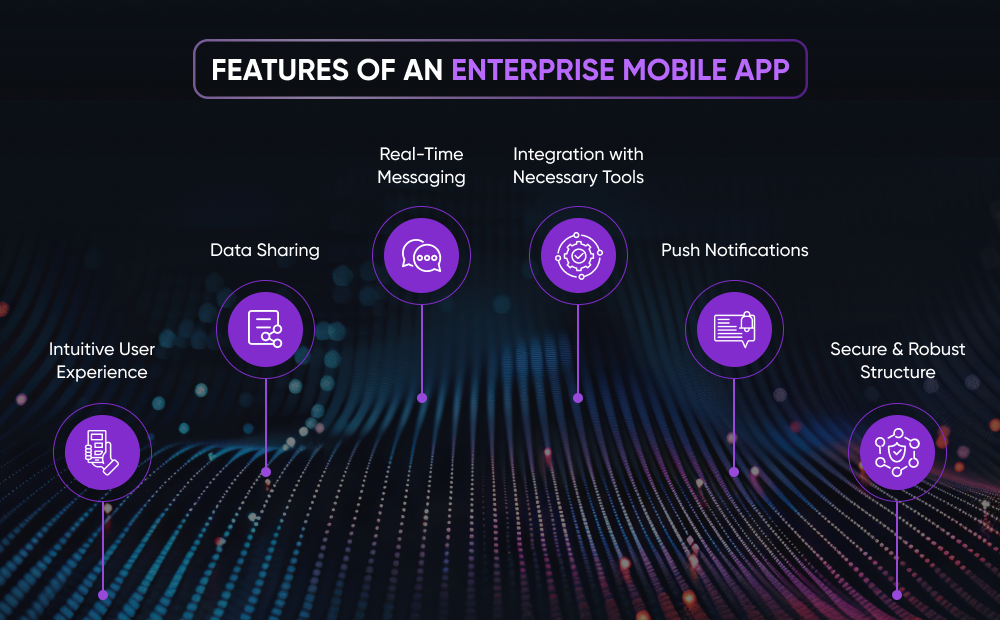
Features of an Enterprise Mobile App
- Intuitive User Experience: Whether it is an enterprise mobile app or an app made for customers, user experience always takes center stage. This will improve the adoption of the app within an enterprise, fulfilling all the important objectives.
- Data Sharing: The application should have a real-time data sharing feature that enables workers of the organization to send and receive data easily. Also, the functionality should be in such a way that data can be shared in any form.
- Real-Time Messaging: An enterprise mobile app should include a messaging feature to facilitate communication among all the involved personnel.
- Integration with Necessary Tools: While building an enterprise mobile app, you must ensure all the fundamental and necessary tools that you need for smooth process management/monitoring are included in it.
- Push Notifications: Be it a task that needs urgent attention or an approaching deadline, push notifications of an enterprise mobile app help in keeping tabs on everything.
- Secure & Robust Structure: A secure infrastructure must be developed for an enterprise mobile application. Workers are putting or exchanging important business data on the application, which makes the security concern more important. The admin of the app or the person who is responsible for it should keep an eye and do regular updates to maintain the security.
Why Businesses Are Turning to Enterprise Apps?
The businesses must consider keeping up with the ever-changing digital landscape and thrive in today’s cutthroat corporate environment. It’s important for improving the client experience, updating operations, and streamlining processes are goals of every business.
Some key points to consider are:
- Mobility and Agility
Modern businesses don’t operate within office walls anymore. Field agents, remote teams, and hybrid workers demand mobile-first solutions. Enterprise apps ensure everyone is connected to the same data ecosystem.
- Real-Time Decision Making
Executives no longer wait for end-of-day reports. Mobile dashboards empower managers to make real-time decisions, whether approving budgets or rerouting logistics.
- Employee Empowerment
When employees feel equipped with intuitive tools, their productivity and satisfaction increase. Enterprise apps often reduce frustration caused by outdated processes.
The Role of Enterprise Apps in Modern Business
One of the primary benefits of enterprise apps lies in their ability to simplify and optimize day-to-day business processes. By automating processes, they eliminate repetitive tasks and improve efficiency. Custom-built enterprise apps bring together data from different teams, offering leaders immediate visibility into performance metrics.
- Elevating the Customer Journey: Enterprise app development equips organizations with the tools to deliver customer demand speed, personalization, and consistency. Customer-facing apps provide real-time support and engagement, while backend apps streamline processes to ensure timely service.
- Accelerating Digital Transformation: Enterprise mobile apps play a critical role by seamlessly integrating advanced technologies such as AI, ML, and IoT into daily operations. These applications improve data accessibility and collaboration but also spark innovation, enabling businesses to keep pace with markets.
Benefits of Investing in Enterprise Apps
- Long-Term Cost Savings: While initial investment is significant, enterprise apps reduce long-term costs through automation, fewer errors, and streamlined workflows.
- Competitive Differentiation: In industries where competitors offer similar products, how fast and efficiently you operate becomes the differentiator. Enterprise apps offer that edge.
- Scalability and Growth: Enterprise apps are built to scale. Whether expanding to new markets or managing larger teams, apps support growth without major overhauls.
Top trends in enterprise mobile development
- Cloud-Centric and Distributed Deployments: Enterprises are increasingly using cloud platforms to deploy mobile apps, which lets them scale resources up or down as needed, and reduce upfront infrastructure costs.
- Modular & Microservices-Based Architecture: Modern enterprise apps are embracing microservices to break down large applications into smaller, independent services. Each component can be developed, deployed, and scaled separately. This modularity boosts reliability, allows faster updates.
- Cloud-Centric and Distributed Deployments: The shift from traditional on-premises infrastructure to cloud solutions continues to accelerate. Enterprises are increasingly using cloud platforms to deploy mobile apps, which lets the enterprises scale resources up or down as needed.
- IoT-Integrated Mobile Applications: The Internet of Things is expanding into enterprise mobility. Mobile apps are increasingly serving as control hubs for IoT ecosystems, allowing employees to monitor connected devices and automate workflows.
- Hyper-Personalization with Advanced Analytics: Enterprises are moving toward hyper-personalization by leveraging deep analytics and AI. Mobile apps are being designed to adapt in real time to user behavior and preferences.
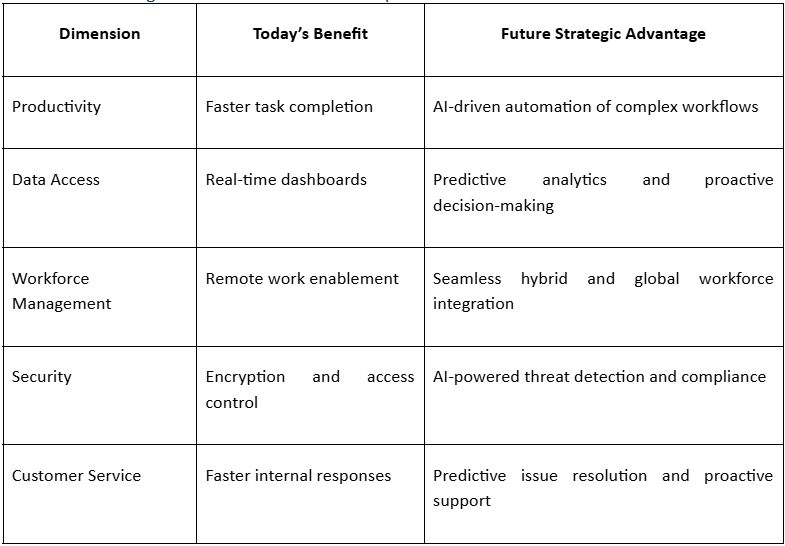
A Forward-Looking Table: Present vs. Future Impact
Conclusion
So, should your business invest in enterprise mobile app development? You need to carefully assess your organization’s needs so that the enterprise mobile app proves to be a profitable venture. From a future-oriented perspective, the answer is a yes. If your business struggles with inefficiency and manual processes, enterprise apps can be a life-changing solution. These apps offer scalability, mobility, and security that align with modern business needs. The real risk is falling behind in a world that rewards speed, agility, and digital intelligence. Developing these mobile apps is no longer just about solving operational inefficiencies; they are about building a resilient, innovative, and competitive future. Though enterprise app development may look very complicated, with the right understanding and knowledge, it can be the most beneficial for the future.