
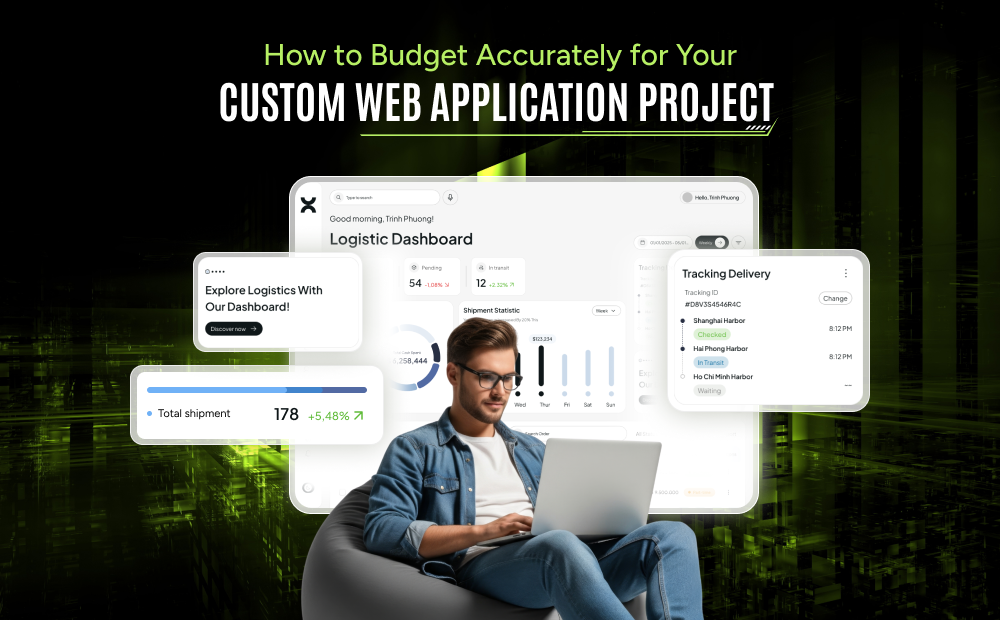
Think of your web application budget as the foundation of your digital strategy. Is it possible to build a house without a blueprint? Yet, many businesses dive into development without a budget. Budgeting does not have to be gruesome if done properly and accurately. Whether you’re a startup creating your first SaaS product or an enterprise modernizing legacy system, success depends on how accurately you budget the project. Building a system designed to fit your business operations like a glove requires an accurate budget. It can be the most challenging part of the project’s life cycle. Miscalculations can cause financial strain, and incomplete delivery. A well-planned budget transforms uncertainty into control and predictability. The goal is to find a realistic, data-informed budget that aligns technical ambition with financial responsibility. Let us explore how tech-driven businesses and startups can budget effectively for custom web applications.
What does ‘custom’ really mean?
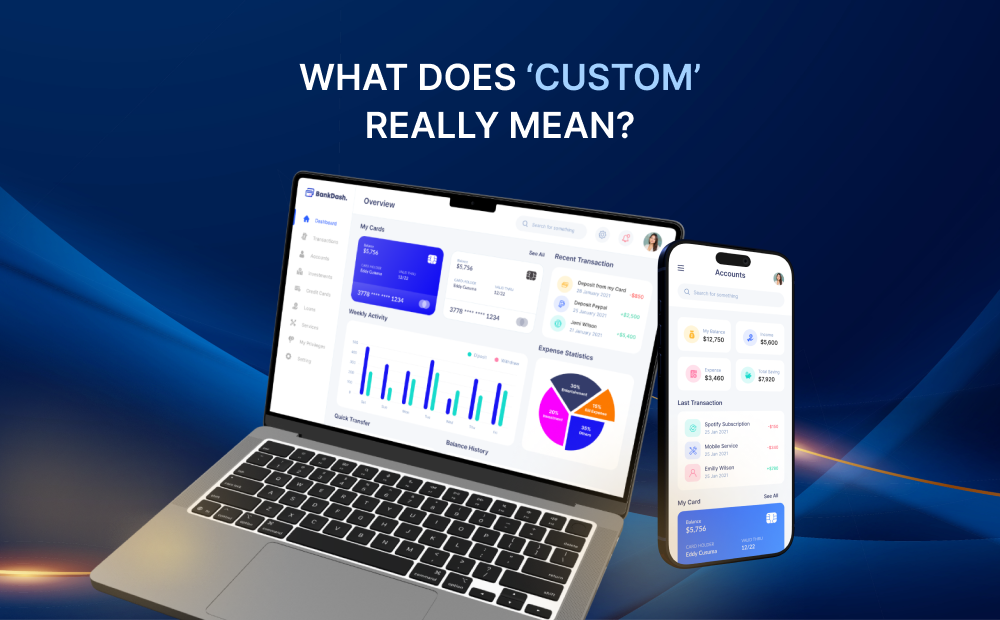
Custom web applications are tailor-made solutions built around your unique business model, and customer expectations. A custom web app involves more stages, all of which directly impact cost.
Key Factors That Define Customization
- User experience: Custom UI/UX design adds time but drives better engagement and conversions.
- Complex business logic: The more rules and workflows your app automates, the more coding hours are required.
- Scalability: Apps designed for future growth need flexible architecture, which increases initial investment.
- Third-party integrations: CRMs, payment gateways, ERPs, and analytics tools often add hidden costs.
Comparing Custom Development vs Template Solutions
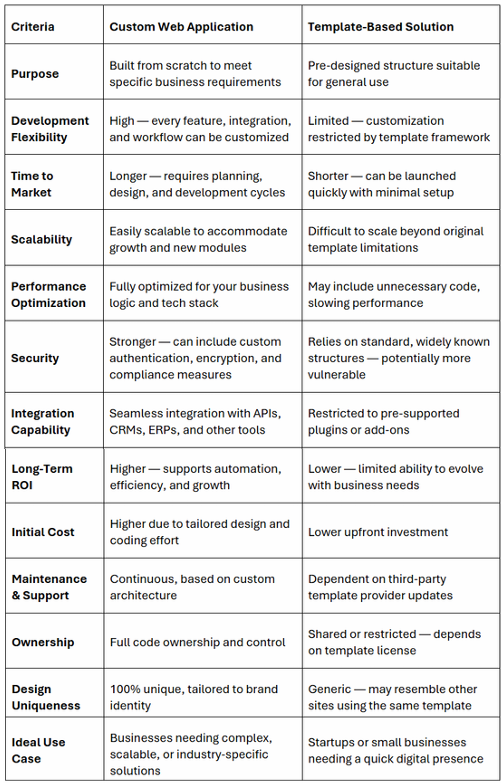
How to Set a Realistic Budget?
An accurate budget must begin with clarity. To understand your business needs and objectives ask yourself:
- What problem does this application solve?
- What’s the minimum version (MVP) that can deliver business value?
- Who is it for, and what user behaviour’s will define success?
- What is your timeline to achieve ROI?
From idea to estimate: The stages of an ideal framework
Requirement Analysis
The analysis phase is essential for outlining the project’s requirements and scope and for discovering any risks and impediments. To achieve clarity, you need to collaborate with the stakeholders and identify few things such as:
- Business objectives
- Target audience and user personas
- Feature list and technical dependencies
Architecture and Technical Design
The development of a visually beautiful and logically developed user interface is important to establish the overall experience of user experience. This phase defines the backbone of your app—databases, integrations, backend frameworks, and scalability models.
Development and Testing
The primary focus during the development phase is implementing the developer’s code. The process of development consists of three components: database development, front end (client side), and back end (server-side). The goal of the testing phase is to ensure that the app is functioning as intended. Breaking down the scope of development and testing into actionable sprints. Break down deliverables into weekly or monthly milestones to track cost progression transparently.
Launch and Maintenance
Post-deployment expenses include infrastructure, monitoring, upgrades, and continuous improvement. These should be factored into your initial budget, not treated as afterthoughts.
Decoding the Cost Drivers
Let’s break down what truly influences your budget:
-
Complexity and Feature Set
The more features your app includes—authentication, payments, analytics, chatbots—the higher the cost. Each feature requires design, development, testing, and maintenance.
-
Technology Stack
Using modern frameworks like React, Node.js, or Laravel enhances scalability but demands skilled developers. Similarly, cloud-native deployment (AWS, Azure) incurs ongoing costs but offers superior uptime and performance.
-
Integration Requirements
Every external system—CRM, ERP, payment gateway—introduces integration complexity, often increasing costs unpredictably.
-
Security and Compliance
If your app deals with personal or financial data, compliance with GDPR, HIPAA, or PCI-DSS adds cost layers for encryption, auditing, and legal validation.
-
Design and UX Depth
An intuitive user interface takes research, prototyping, and iteration. Though often undervalued, good UX reduces churn and support costs.
Optimize Your Budget Without Sacrificing Quality
Optimizing a budget means spending smarter.
Here’s how we approach it:
- Define clear business objectives: Start by clarifying what your site must accomplish—sales, leads, engagement—so every feature serves a purpose.
- Use agile development cycles: Breaking projects into sprints ensures transparency and early testing.
- Leverage open-source technologies: Frameworks like Laravel, WordPress, and Django offer flexibility without license fees.
- Outsource strategically: Collaborate with local expertise (for UX or strategy) and offshore talent (for coding) to reduce overhead.
- Adopt an MVP approach: Build a Minimum Viable Product first, test user response, and expand later.
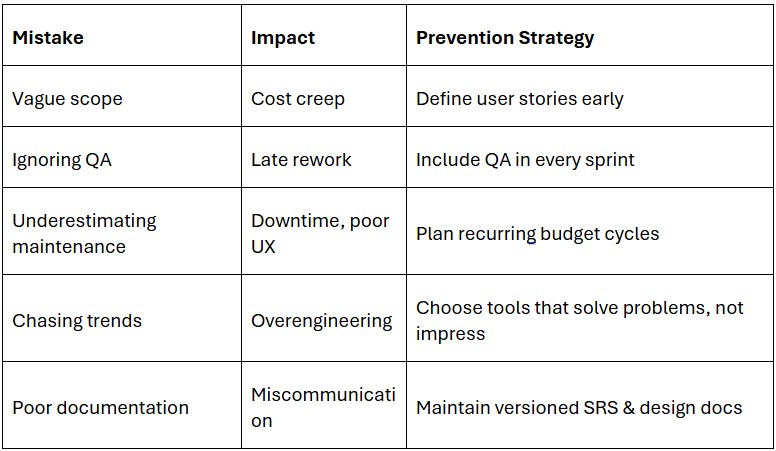
Common Budgeting Mistakes and How to Avoid Them
Key Takeaways
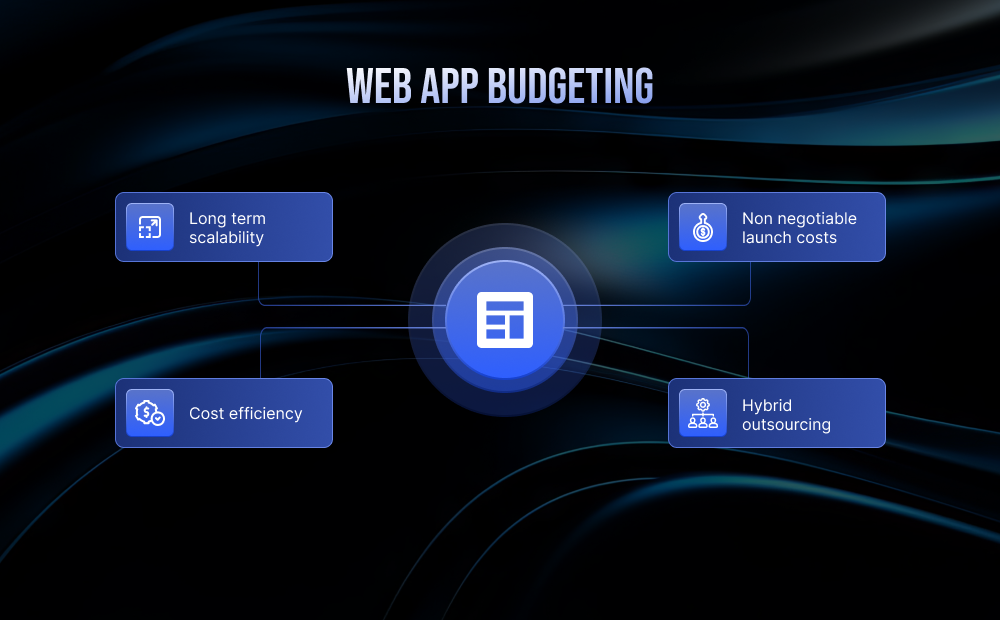
- Custom development delivers long-term scalability and control.
- Hybrid outsourcing offers global cost efficiency.
- Accurate budgeting starts with clarity on goals and features.
- Post-launch costs (maintenance, hosting, updates) are non-negotiable.
- AI tools can speed up production without quality loss.
Conclusion
A web app designed today must stay compatible with emerging tools, browsers, and devices. Budgeting for a web development project in 2026 is about making a strategic investment. It is future-proofing your business.
Ensuring accuracy and appropriate setup of web app development project by allocating resources efficiently, prioritizing and managing expenses, and anticipating financial requirements that may come up eventually ensuring a robust foundation for project success and optimal function. When you treat budgeting as a continuous, data-driven process rather than a one-time quote, you gain control over cost and success itself. Having clarity and a vision of numbers, and your users before writing a code will help you build an almost accurate blueprint for the foundation of your project. The smarter your budget, the better your journey from concept to launch.
Plan your web application with clarity and confidence. Contact Confianz for a tailored estimate and expert guidance to get your project started right.