

In today’s hyperconnected digital world, millions of apps compete for just a few seconds of user attention. While getting users to download an app is challenging, retaining them is even harder. Studies consistently show that more than half of users abandon an app within the first week-and many don’t even complete their first session.
Why does this happen?
In most cases, it’s not the idea-it’s the experience and performance. Slow load times, heavy app size, confusing UI, poor onboarding, crashes, or excessive battery usage quickly erode trust. On the other hand, apps that feel fast, intuitive, and purposeful earn loyalty.
App performance and user retention are deeply interconnected. A great experience keeps users engaged, while performance issues silently accelerate churn. Let’s explore how to address both-right from planning to post-launch.
Performance and Retention: Two Sides of the Same Coin
An app’s performance is more than how the user feels while interacting with it. If your app delays a response, the user perceives it as broken. If it feels fast, they perceive your brand as competent. The users won’t like your clever integrations or fancy widgets if the app lags. Performance is invisible when it’s good, but painfully noticeable when it’s bad. The takeaway is simple: features attract users; performance retains them.
Build for Performance
Performance issues are often symptoms of poor architecture choices in the project. Frameworks like MVVM, MVP, or Clean Architecture help isolate concerns and reduce dependencies. Tools such as LeakCanary (Android) and Instruments (iOS) should be part of every developer’s toolbox to minimize memory leaks. Optimize asset loading by compressing images and use WebP or AVIF formats, defer loading of secondary assets (lazy loading), and Storing critical assets locally for faster access.
Maximizing Mobile App Performance: The Backbone of Retention
Performance issues are rarely accidental. They usually stem from early architectural and technology choices.
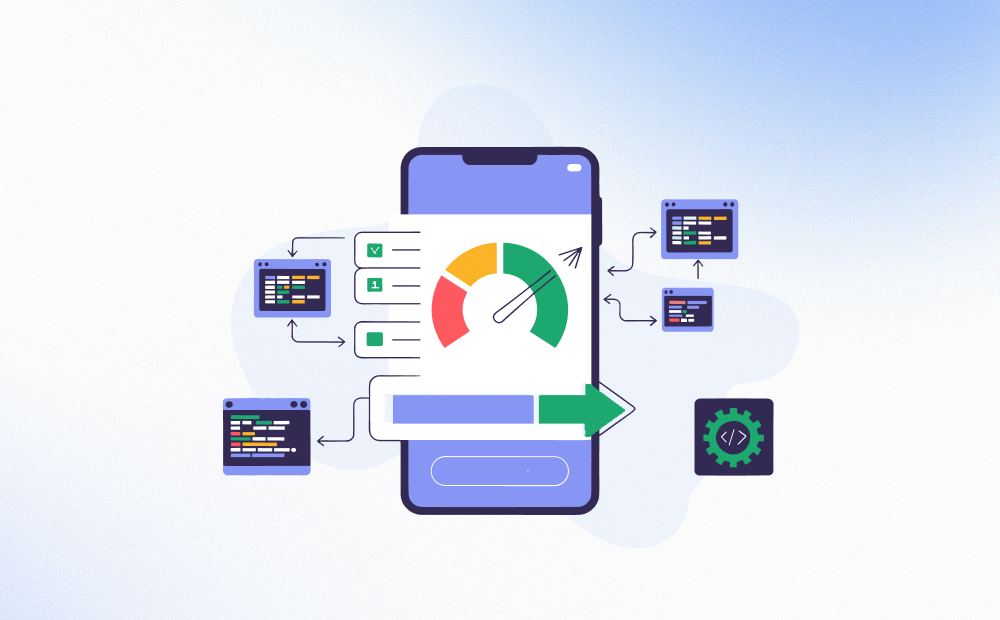
Optimizing mobile app performance is essential for delivering exceptional user experiences and maintaining user engagement. By adhering to best practices, leveraging observability for proactive monitoring, and continuously optimizing app performance, developers can create mobile applications that can exceed user expectations.
- Set Clear Goals: Define specific performance objectives aligned with user expectations and business needs. For instance, aim for a maximum page load time of 2 seconds for an e-commerce website.
- Refine Code Efficiency: Write clean, optimized code using efficient algorithms and data structures. Optimize database queries and minimize unnecessary loops for improved execution speed.
- Minimize HTTP Requests: Combine CSS and JavaScript files to reduce server requests. Utilize image compression techniques and lazy loading to decrease load times without compromising quality.
- Optimize Image Handling: Compress images and use responsive image techniques to serve appropriately sized images based on device resolution.
- Implement Effective Caching: Cache frequently accessed data at different levels to reduce retrieval times. Cache database query results and utilize browser caching for static assets.
- Enhance Database Queries: Index frequently accessed columns and optimize query execution plans to improve database performance.
Enhance User Retention Through Experience Optimization
- Personalized experiences, recommendations, onboarding flows, and notifications can improve retention.
- Use analytics tools like Mixpanel, Amplitude, or CleverTap to study user behavior.
- Consider Interactive tutorials, Smart defaults, and Progressive disclosure of features to significantly reduce the drop-offs.
- Incorporate subtle gamification elements such as achievement badges and progress bars.
- Use push notifications to re-engage users and reduce churn.
- Offer value-driven messages within the app for feature updates and promotions.
- Include a simple feedback button or prompt at key user milestones.
- Analyze reviews on app stores and social media.
Find latency killers
Latency is known to cause app errors and often crashes the entire application. It is very important to remove latency issues from your application.
To effectively deal with latency related issues:
- Reduce the need for latency killer APIs that you might be using on your mobile.
- You can restrict third-party latency sources when your network quality is poor
Monitor Post-Launch Metrics
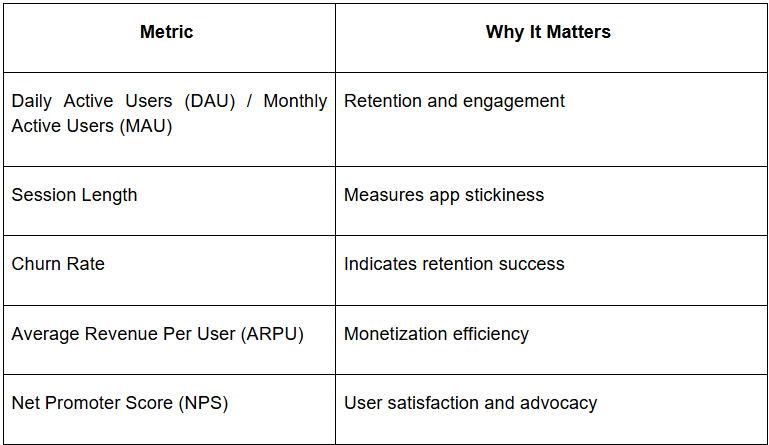
Ongoing monitoring ensures sustained performance and retention improvement.
Key metrics to look out for:
The Role of CI/CD in Sustained Performance
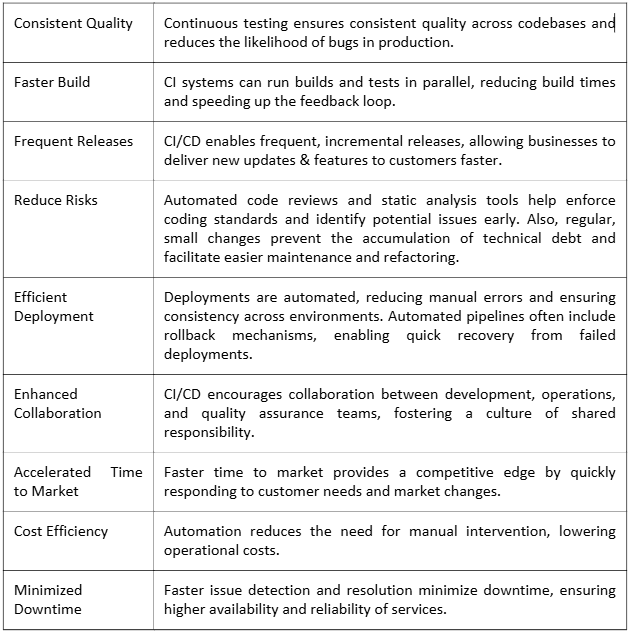
CI/CD stands for Continuous Integration/Continuous Delivery or Deployment. It’s a set of practices that automates the software development process from code commit to deployment. If your app updates are infrequent or buggy, users lose confidence.
Benefits of using CI/CD
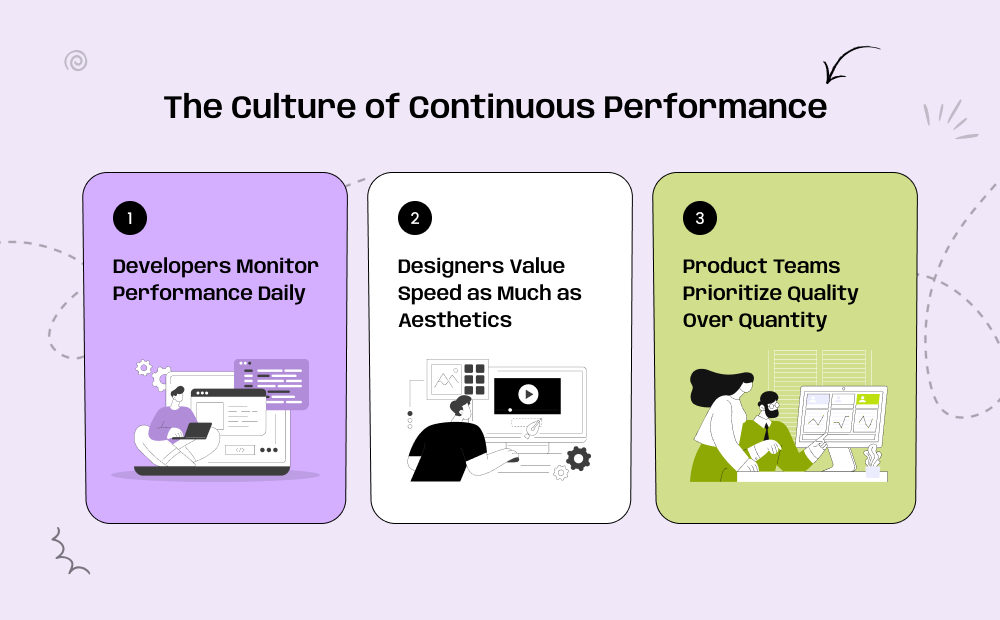
The Culture of Continuous Performance
Create a company culture where:
- Developers monitor performance daily.
- Designers value speed as much as aesthetics.
- Product teams prioritize quality over quantity.
Conclusion
In today’s competitive app landscape, performance is the foundation of user retention. A fast, reliable, and well-optimized app builds trust, enhances user experience, and keeps users coming back. By focusing on efficient architecture, continuous monitoring, and user-centric optimization, teams can reduce churn and create apps that deliver long-term value.
Want to build high-performance mobile apps users love? Talk to our experts to optimize performance, reduce churn, and scale with confidence.