

Apps or mobile applications have become immensely popular in the recent decade. As the market and ecosystem for mobile apps growing, new approaches are coming out including how to make the same app for different platforms. Thus paved the way for the development of cross-platform development. For businesses planning to build a mobile app, one of the first—and most critical decisions is whether to choose native development or cross-platform development. The decision between native and cross-platform mobile app development often determines how fast a business can launch and how customers will experience its brand.
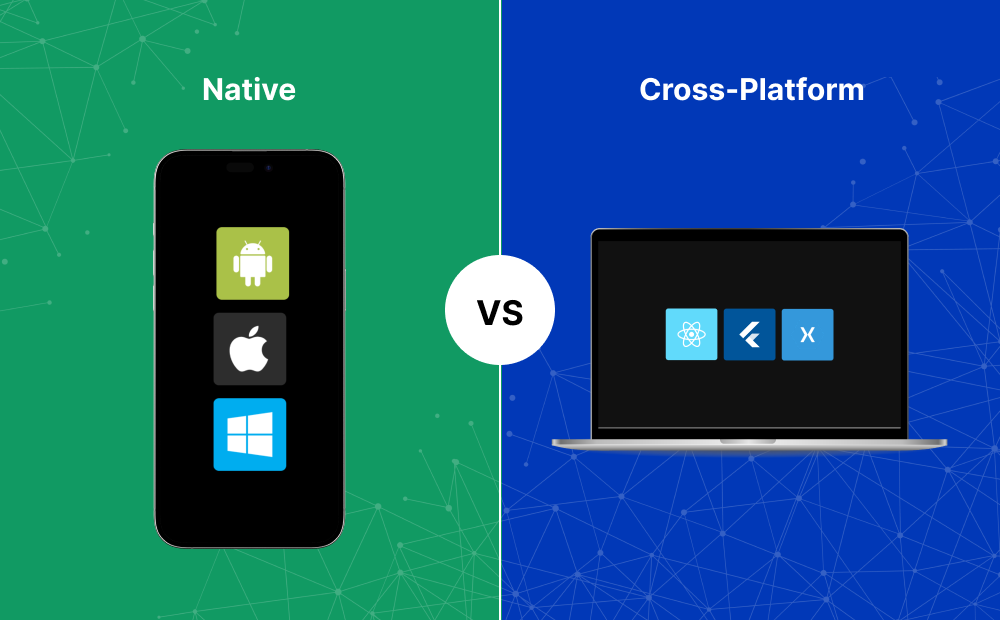
Understanding Native App Development
Native mobile applications are those made specifically for iOS or Android platforms. These apps are coded using tools and programming languages officially supported by the platform provider. Native Android apps are written in programming languages such as Java or Kotlin. Native Apps maximize the use of the device’s hardware, including the GPS, Camera, accelerometer, and push notification. They are designed with performance in mind. By integrating with the device’s UI and following platform-specific design guidelines. These apps leverage tools and SDKs provided by Apple and Google, ensuring tight integration with the platform.
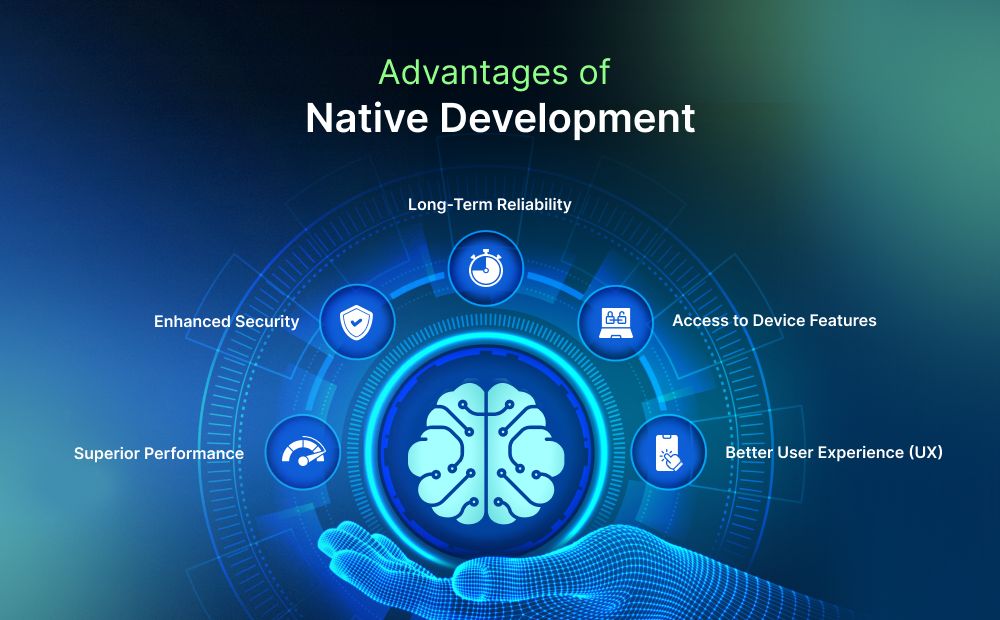
Advantages of Native Development:
- Superior Performance – Native apps are optimized for a specific platform, delivering faster load times and smoother execution.
- Enhanced Security – Direct integration with the platform offers stronger security protocols.
- Long-Term Reliability – Native apps adapt faster to platform updates.
- Access to Device Features – Developers can easily integrate features like GPS, camera, biometric authentication, and push notifications.
- Better User Experience (UX) – Native design aligns with platform-specific guidelines, giving users a familiar and seamless experience.
Disadvantages of Native Development:
- Higher Development Costs – Separate teams are required for Android and iOS.
- Longer Development Time – Building two apps doubles the timeline.
- Maintenance Complexity – Updates need to be rolled out for each platform independently.
Understanding Cross-Platform Development
Cross-Platform development is another viable option for customers with tight-budgets and need to release their apps, as soon as possibles. It also helps the developer save time. Cross-platform frameworks like React Native, Flutter, Xamarin, and Ionic allow developers to build apps for multiple platforms with a single code-base. The cross-platform development allows the developers to create code only once and have it run on multiple platforms, including Window’s, iOS, Android, and web browsers.
Some Key Features of Cross-Platform App:
- Faster Development Time: Cross-platform Development has the potential to result in shorter development cycles and revision’s because developer’s just need to create and manage,a single code base for different platforms.
- Code Re-usability: Using framework’s, libraries,or other tools that facilitate cross-platform development, developers can create a single code base and then distribute the program across several platforms. Reusing code between platforms is one of the primary benefits of cross-platforms programming.
- Performance: It’s possible that cross-platform programs don’t always function as effectively as native apps because they frequently rely on intermediary layers.
Advantages of Cross-Platform Development:
- Faster Development – A single code-base reduces time-to-market.
- Cost-Effective – Businesses can save up to 40% compared to native development.
- Wider Reach – One app can run on multiple platforms simultaneously.
- Easier Maintenance – Updates and bug fixes apply to all platforms at once.
- Growing Ecosystem – Tools like Flutter and React Native provide near-native performance.
Disadvantages of Cross-Platform Development:
- Performance Limitations – Heavy apps (gaming, AR/VR, 3D rendering) may lag.
- Limited Access to Platform Features – Some advanced device functions may not be fully supported.
- UI/UX Inconsistencies – Apps may not feel 100% native to users.
- Framework Dependency – Long-term support depends on third-party frameworks.
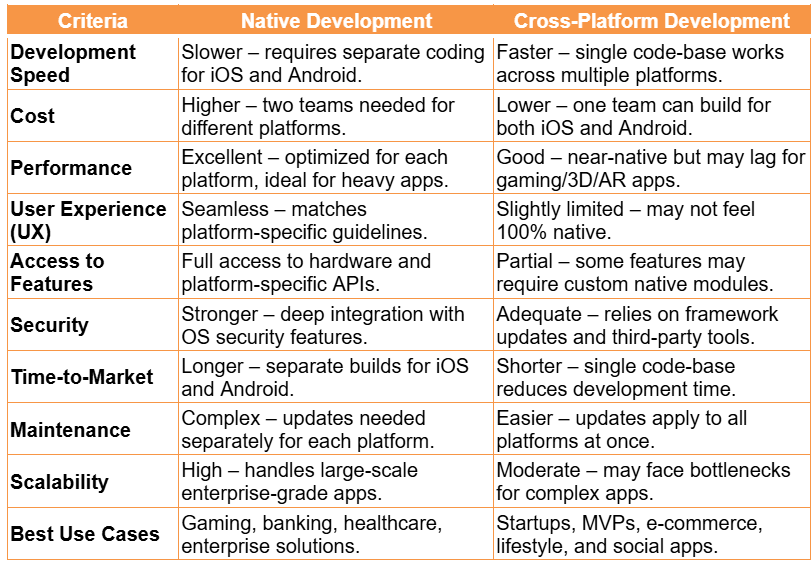
Comparison Table: Native vs Cross-Platform Mobile App Development
Key Factors to Consider while choosing the platform for mobile app development
Choosing between native and cross-platform depends on several critical factors:
- If your app requires intensive graphics, gaming, AR/VR, or heavy animations, native development is the better option.
- Cross-platform frameworks have improved significantly (especially Flutter) but may not match native apps in complex UI/UX cases.
- Native apps take longer since each platform requires separate coding.
- If the app is primarily content-driven, e-commerce, or service-based, cross-platform can deliver sufficient performance.
- Native development offers pixel-perfect UI aligned with platform standards.
- Cross-platform allows for a single development team, reducing expenses.
- Native apps need individual updates per platform.
- Cross-platform updates are synchronized across all platforms.
- Skilled native developers are often more expensive and harder to find.
- Cross-platform frameworks attract a larger developer community, easing recruitment.
- Cross-platform apps can be developed 30–50% faster, making them ideal for startups.
- Cross-platform apps are scalable but may hit performance bottlenecks in high-load scenarios.
- Native apps may require two teams (iOS and Android), increasing costs.
- Native apps scale more effectively when handling millions of users or integrating complex third-party APIs.
Conclusion
The decision between native, and cross-platform techniques in the field of app development ultimately comes down to trade-offs. The best strategy depends on the goals of the project, the target audience, the money, and the schedule. For unmatched performance, top-tier UX, and strong security, native development is your answer. To save costs, launch quickly, and test the waters, cross-platform development may be the smarter option.