

ERP systems have become the backbone of modern businesses, helping organizations streamline operations. Odoo stands out as a versatile and comprehensive solution for businesses, even though there are many options for ERP systems available today. The modular structure, flexibility, and open-source foundation make it appealing to enterprises. Odoo is an extensive suite of applications to streamline operations across sales, finance, manufacturing, HR, and beyond. It is the most flexible ERP system available today. ERP implementations are about transforming the way people work. Odoo, with its modular design and flexibility, offers tremendous opportunities for businesses. Nearly half of ERP projects encounter delays, cost overruns, or outright failure. The reasons are rarely due to the software itself; rather, they stem from how businesses approach the implementation process.
Most Common Pitfalls Businesses Should Avoid
Underestimating the Importance of Strategic Alignment
The Pitfall: Jumping into the implementation phase without a clear understanding of business needs.
Approaching Odoo implementation purely as a technology project. In reality, ERP implementation is a business transformation initiative that should align with the company’s overall vision and strategic goals. When leaders treat Odoo as just another software tool, they miss the opportunity to redesign business processes, improve decision-making, and unlock growth. Lack of alignment results in:
- Misaligned objectives between IT and business departments.
- Conflicting priorities across teams.
- Investments that don’t deliver measurable ROI.
Start with a comprehensive requirements analysis. Include key stakeholders from all departments to identify main points, future goals, and specific use cases that need to be achieved in Odoo. This ensures alignment between the software’s capabilities and business objectives. Accurate planning also helps optimize your Odoo implementation cost by focusing only on the necessary features.
Choosing an irrelevant Odoo Module
- The Pitfall: Selecting modules that do not go hand in hand with business requirements.
- Solution: Odoo’s modular structure provides adequate flexibility; however, selecting irrelevant modules can lead to inefficiencies. Initiating a thorough assessment of your business processes to determine which modules are essential. Consulting with an experienced Odoo implementation partner can help you make the best-informed decisions and avoid costly mistakes.
Ignoring Change Management
ERP implementation is not just about technology—it’s about people. Employees must adopt new ways of working, which can create resistance if not managed properly.
- The Pitfall: Employees cling to old systems (like spreadsheets or legacy tools), Resistance slows adoption, reducing ROI, and Morale suffers when staff feel excluded from decisions.
- Solution:
Invest in change management through:
- Transparent communication about the project’s purpose.
- Regular training sessions tailored to different user groups.
- Appointing “change champions” within each department to advocate adoption.
Underestimating Data Migration Challenges
- The Pitfall: Avoiding the complexity of transferring data from legacy systems to Odoo.
- Solution: Collaborate with your Odoo implementation partner to streamline the process. Audit and clean your existing data before migration. Identify critical data, remove duplicates, and ensure proper formatting.
Poor Budget Management
- The Pitfall: Failing to plan for the full scope of implementation costs.
- Solution: Define a realistic budget that accounts for software licenses, Odoo integration services, training, and post-launch support. A skilled Odoo implementation partner can help optimize costs while ensuring the project stays within budget.
Neglecting Post-Go-Live Support
Many businesses think the project ends at go-live. In reality, that’s just the beginning. Without ongoing support, issues pile up, and employees lose confidence in the system.
- The Pitfall: Assuming the job is done once Odoo goes live.
- Solution: Budget for post-go-live support, system monitoring, and continuous optimization.
Poor Project Scoping
- The Pitfall: One of the earliest mistakes is failing to define the scope of the project in detail. Without clear scoping, teams either overcommit or overlook critical requirements.
- Leads to scope creep and ballooning costs.
- Creates misaligned expectations among stakeholders.
- Makes it impossible to track progress accurately.
- Solution: Document a comprehensive scope statement covering:
- Business requirements.
- Functional modules.
- Integration needs.
- Constraints and assumptions.
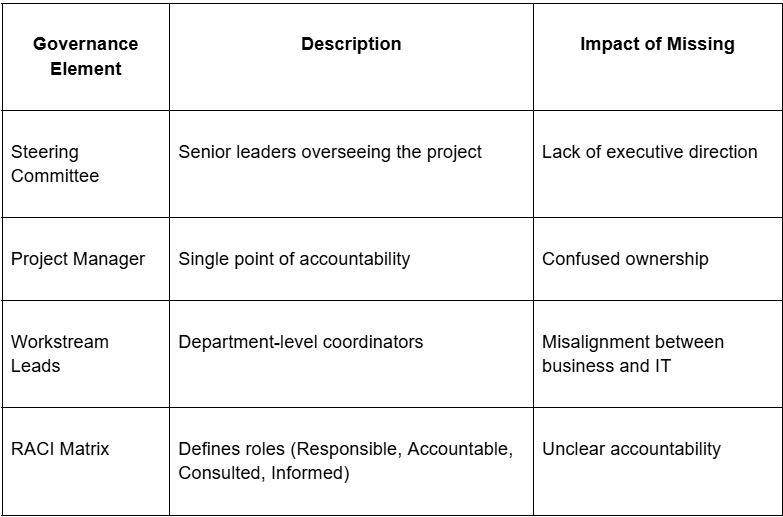
Inadequate Project Governance
The Pitfall: Strong governance ensures accountability and smooth decision-making. Without it, technical disputes and project bottlenecks remain unresolved.
- Leads to confusion about roles and responsibilities.
- Delays critical approvals.
- Allows problems to escalate without resolution.
Solution:
Overlooking Security and Compliance
The Pitfall: ERP systems contain sensitive data—financial records, employee details, and customer information. Weak security exposes businesses to risk.
- Data breaches damage reputation.
- Non-compliance leads to fines (e.g., GDPR).
- Unauthorized access compromises operations.
Solution: Implement: Role-based access controls (RBAC), Data encryption in transit and at rest, Audit logging for accountability, and Regular vulnerability assessments.
Why This Matters in 2025
Sustainability and long-term resilience have become priorities in 2025. Odoo, when implemented effectively, supports this by offering scalability, transparency, and automation. Over-customization or lack of user adoption can undermine these benefits and result in wasteful rework. A poorly managed implementation can create compliance challenges. Poor integration planning or weak scalability decisions are more costly now than ever, and they directly impact customer experience. Avoiding pitfalls in Odoo implementation is required for staying relevant in a marketplace where expectations evolve daily.
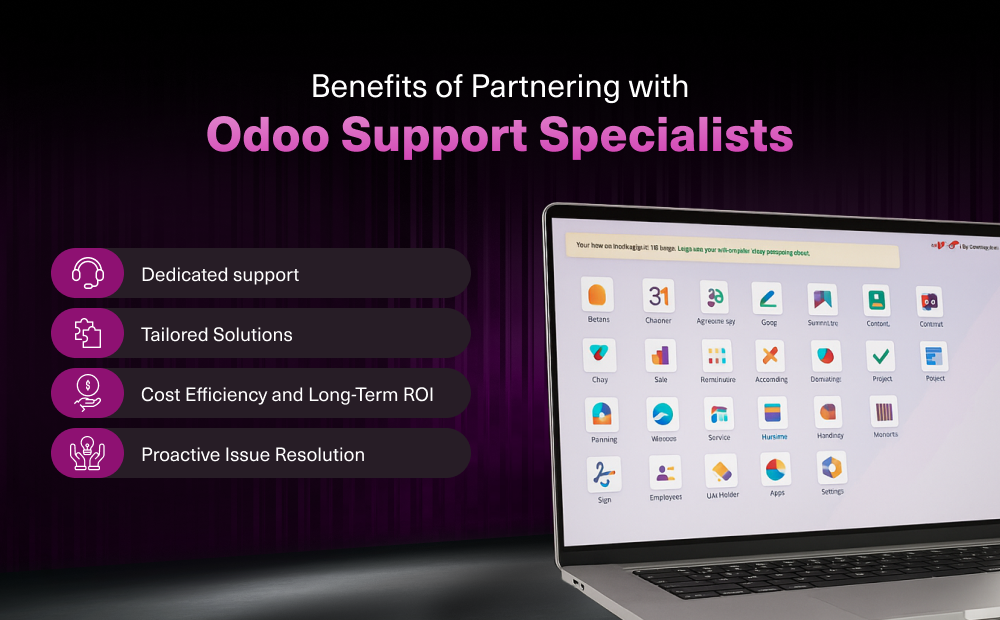
Benefits Of Partnering With Odoo Support Specialists
- Dedicated Support: The right team of ODOO ERP support specialists offers all types of help, including infrastructure, functional, and technical support. Bug fixes, documentation, customization, and other services are included with the ODOO support package.
- Tailored solutions: The Odoo support specialists offer customized solution that meets the specific business’s operational requirements, assisting them in their ongoing business growth.
- Cost Efficiency and Long-Term ROI: Specialists prevent pitfalls, reduce rework, and enhance adoption, ultimately saving time, resources, and money.
- Proactive issue resolution: Odoo specialists on call, businesses can resolve technical issues, bugs, or configuration errors quickly. This minimizes downtime and ensures smooth operation.
Conclusion
Projects often fail because companies underestimate the importance of strategic alignment, disciplined technical execution, and thoughtful change management. Odoo implementation is a strategic investment that can transform your business operations when executed correctly. The success of Odoo implementation depends on rigorous planning, governance, architecture design, integration, testing, and continuous optimization. Try to begin by understanding your business workflows and requirements, and configuring Odoo modules to align with your operations. Orchestrating technology with people, processes, and systems is really important for a successful Odoo implementation. The businesses that avoid the common pitfalls across these dimensions unlock their full potential to drive efficiency, scalability, and sustainable growth.