


The small businesses are increasingly turning to Enterprise Resource Planning (ERP) systems to streamline operations, enhance efficiency, and support growth. These ERP systems are essential for running thousands of companies across all sizes and sectors. Choosing the right ERP system is crucial for small businesses aiming to streamline operations, reduce manual work, and grow efficiently. Here’s a curated list of the top 10 ERP solutions in 2025, tailored for small business needs.
1. Odoo
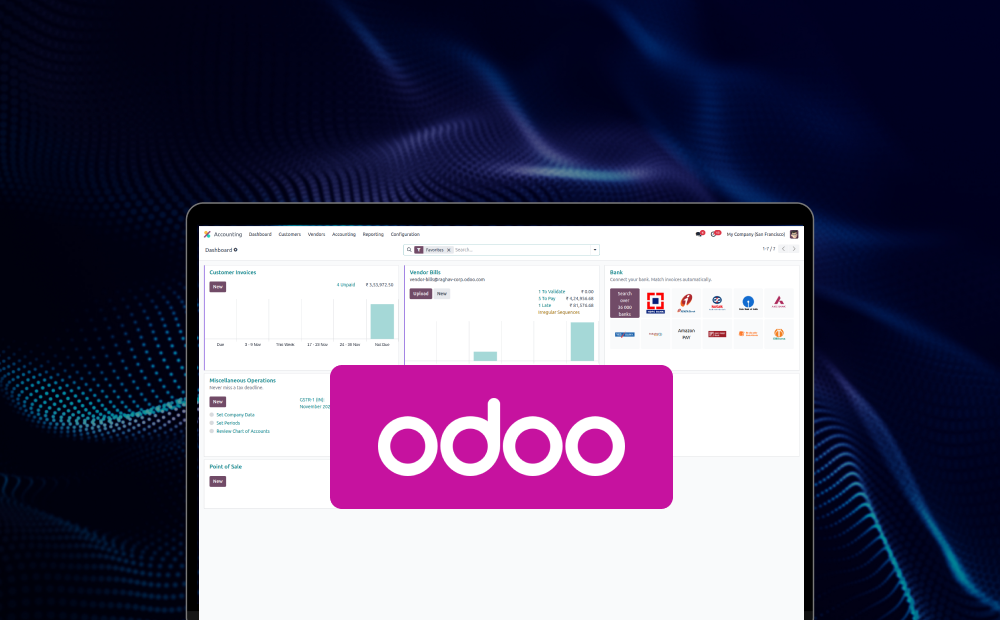
Odoo is an open-source, modular ERP system offering a complete suite of business applications, including CRM, accounting, inventory, HR, project management, and e-commerce.
Key Features:
- Modular design – install only what you need
- Web-based interface, mobile-friendly
- Seamless integration between apps (CRM, POS, eCommerce, etc.)
- Studio app for low-code customization
- Modern tech stack (Python, PostgreSQL, OWL)
Why It Stands Out: Odoo offers strong customization and automation features with open APIs and an advanced user experience. In recent versions, AI-assisted document handling, predictive inventory, and chatbot integration were added, making it more advanced than many competitors.
Compared to other ERPs like SAP-B1 or QuickBooks, Odoo offers deeper customization and faster deployment with a lower TCO.
2. NetSuite (Oracle)
A leading cloud-based ERP, NetSuite provides a comprehensive business management suite for small to mid-sized enterprises.
Key Features:
- Real-time dashboards and analytics
- Strong financial and inventory management
- Native multi-currency and tax support
Key Takeaway: While NetSuite is powerful, customization can be complex, and licensing costs may be higher for very small teams.
3. Zoho ERP (Zoho One)
Zoho offers a suite of more than 40 business apps under a unified platform.
Key Features:
- CRM, books, inventory, people, projects
- AI-powered assistant “Zia”
- API-based extensibility
Key Takeaway: Best suited for tech-savvy small businesses that need a tightly integrated suite of tools. However, Odoo, built on Python and PostgreSQL, often provides more robust backend logic and manufacturing features compared to Zoho, which is primarily built on proprietary technology with limited backend extensibility.
4. SAP Business One
Designed for small businesses, SAP B1 offers core ERP functionalities like accounting, procurement, and CRM.
Key Features:
- SQL-based backend (SAP HANA optional)
- Inventory and production tools
- Real-time reporting
Key Takeaway: While SAP B1 is reliable, it requires certified consultants for customization and is less agile than platforms like Odoo, ERPNext, and Zoho Books when it comes to modular additions, user interface customization, and rapid deployment.
5. Microsoft Dynamics 365 Business Central
Microsoft’s ERP for SMBs brings together finance, operations, sales, and customer service.
Key Features:
- Integration with Microsoft 365 and Power Platform
- AI-assisted insights and forecasting
- Power BI dashboard embedding
Key Takeaway: Technically robust, but licensing and implementation can be a barrier for budget-sensitive firms. Odoo offers a comparable set of features with simpler deployment and significantly lower total cost of ownership (TCO).
6. Acumatica
Acumatica is a cloud-first ERP platform known for flexible licensing and strong APIs.
Key Features:
- RESTful API integration
- Custom workflows and real-time dashboards
- Industry editions for manufacturing, construction, and distribution
Key Takeaway: Both Acumatica and Odoo are strong ERP platforms in their respective domains. Acumatica is ideal for mid-sized businesses requiring advanced cloud capabilities and industry-specific solutions, while Odoo is a flexible, open-source ERP that suits the needs of small to growing businesses with tighter budgets and a need for rapid customization.
7. Sage Intacct
Sage Intacct is a cloud-based financial management system that’s particularly strong in core accounting functions and compliance.
Key Features:
- Multi-entity, multi-currency support
- Real-time financial dashboards
- Strong audit and compliance tracking
- Scalable reporting structure
Key Takeaway: A great fit for companies that are finance-centric or require strong accounting governance. While not as modular as Odoo, it integrates well with third-party apps and offers deep financial control. Odoo, on the other hand, provides accounting plus broader ERP modules out of the box.
8. Infor CloudSuite
Infor CloudSuite is a cloud-native ERP tailored to specific industries like manufacturing, healthcare, and retail.
Key Features:
- Industry-specific editions with pre-built workflows
- AI-driven analytics through Infor Coleman
- Flexible deployment: public cloud, private cloud, or hybrid
Key Takeaway: Ideal for industry-specific ERP needs with built-in intelligence and scalable infrastructure. Infor CloudSuite is best for niche mid-sized businesses, whereas Odoo’s modular and open-source design gives smaller businesses a flexible starting point with the ability to grow.
9. QuickBooks Enterprise
QuickBooks Enterprise extends the popular QuickBooks experience to meet the needs of growing small to mid-sized businesses with advanced inventory and reporting tools.
Key Features:
- Advanced inventory management
- Customizable user roles and permissions
- Strong financial and payroll integration
- Locally hosted or cloud-based options
Key Takeaway: QuickBooks Enterprise is a strong step up from QuickBooks Online, ideal for businesses that need advanced accounting and inventory, but not a full ERP suite. Odoo and Acumatica offer a more complete ERP framework, but QuickBooks is easier to adopt for accounting-focused teams transitioning to ERP.
10. ERPNext
An open-source ERP similar to Odoo, built on Python and the Frappe framework.
Key Features:
- Full suite: HR, Projects, CRM, Inventory
- Clean web interface
- Community-driven with GitHub access
Key Takeaway: A strong alternative to both Odoo and Acumatica, but Odoo’s extensive ecosystem, modular apps, and mobile-readiness, along with Acumatica’s mature cloud infrastructure and industry-specific solutions, give them an edge in user adoption, flexibility, and scalability, depending on business size and technical needs.
When selecting an ERP for your small business, it’s important to consider factors such as customizability, integration capabilities, ease of use, scalability, and total cost of ownership. Each ERP listed here offers unique strengths tailored to different business needs and industries. The right choice depends on your organization’s size, budget, and long-term goals, so selecting a solution that aligns with your specific operational and technical requirements is key to long-term success.
Talk to our experts now
Related posts:
 How to Maximize Business Success with an Expert ERP Consultant
 Getting Started with ERP Consulting: A Smart Guide
 Best Practices for Successful Odoo Implementation and Optimization
 An Ultimate Guide to Choosing the Best Mobile App Development Company in the USA
 The Transformative Impact of Artificial Intelligence on Mobile App Development