
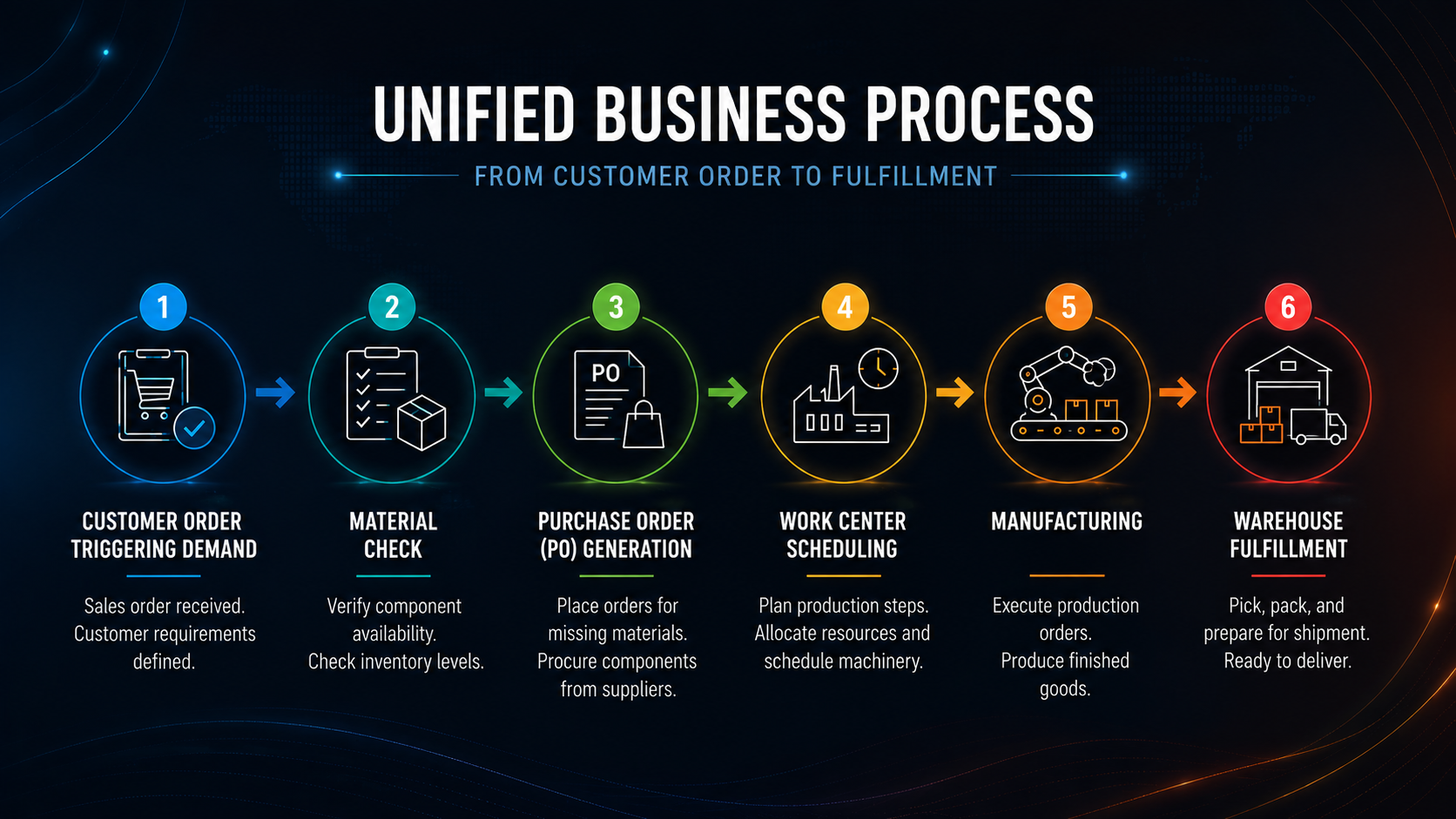
Sales confirms customer requirements. Purchasing checks component availability. The warehouse reviews stock. Production assesses capacity. Finance prepares for billing. On paper, these are separate activities, but in reality, it’s one connected business process.
That is the kind of connection modern ERP systems increasingly need to support—and where Odoo’s recent evolution becomes especially relevant.
Odoo has continued to pursue steady, incremental improvement throughout Version 19. The Odoo 19.1-19.4 release cycle brought refinements to manufacturing, inventory, ecommerce, financial processes, mobile access, usability, and AI-assisted work.
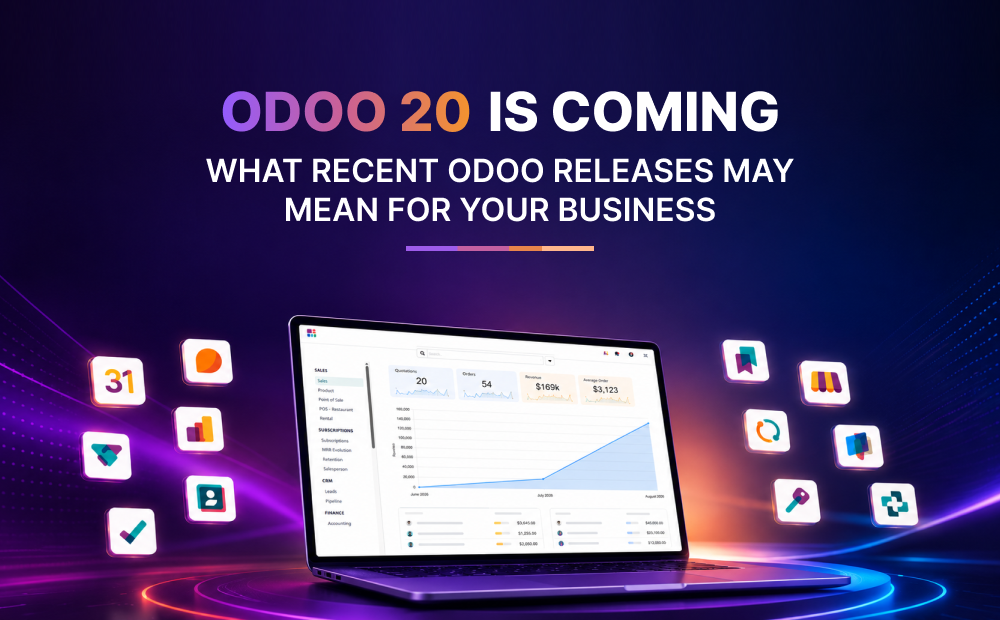
Odoo 20 is scheduled to be unveiled at Odoo Experience 2026, September 24–26 in Brussels. While the final Odoo 20 functionality still needs to be confirmed, the progression through 19.1–19.4 offers businesses something useful: a view of where Odoo has been investing its attention.
For light manufacturers, wholesale distributors, and ecommerce businesses, that direction may be more important than any individual new feature.
Should Your Business Be Thinking About Odoo 20?
Whether you’re planning a new Odoo implementation or considering an upgrade from an earlier version, the key is to evaluate Odoo 20 against the way your business operates.
For existing Odoo customers, a new version does not automatically mean an upgrade is the right move. The better question is:
What problem could the newer functionality solve for us?
That requires looking beyond the version number. Before planning an upgrade, evaluate how your current environment aligns with these core operational areas:
| Area to Review | Questions to Ask |
|---|---|
| Current System | Which Odoo version are we running today? |
| Business Processes | Which operational workflows are creating the most friction? |
| Customizations | Could newer standard functionality replace any workarounds or custom modules? |
| Studio | Could newer standard functionality replace Odoo Studio additions? |
| Integrations | How will changes impact external APIs, EDI, or third-party software connections? |
| Data & Reports | Are existing data structures and custom reports clean enough for migration? |
| Testing | What workflows would need to be validated? |
| Training | What training or adoption work would be required? |
| Timing | Does an upgrade align with seasonal business cycles or create operational risk? |
For businesses planning a new Odoo implementation, the calculation is different. Starting with the most current version available generally provides a longer runway, but the decision should still begin with business processes rather than the feature list.
Identify the workflows that matter most during your ERP implementation planning, evaluate standard functionality versus customization, and consider data migration, integrations, reporting, user adoption, and long-term upgrade readiness.
The technology should fit the operating model—not the other way around.
From Separate Steps to a More Connected Operation
Consider that Monday morning order again. A customer wants a particular product configuration. The sales team needs to know whether it can be delivered. That question quickly reaches beyond sales.
Are the required components available? If not, when can they arrive? Does purchasing need to place an order? Does production have capacity? Which work center will handle the job? When can the finished product reach the warehouse?
Recent Odoo manufacturing improvements increasingly answer these questions. Across the 19.x release cycle, Odoo introduced developments such as manufacturing-order splitting, improved manufacturing-order visibility, bill-of-material comparisons, continuous production capabilities, and clearer information around components, work centers, deadlines, and remaining production time.
The significance is not a single feature. It is the direction.
For a light manufacturer, establishing connected manufacturing and planning across demand, materials, purchasing, production, and fulfillment can make it easier for teams to work from the same operational picture. For wholesale distributors, the same principle applies to inventory availability, supplier timing, replenishment, warehouse activity, and customer commitments.
And for manufacturers or distributors selling online, the connection becomes even more important. A website can promise a product in stock, but the real question is whether the business can fulfill that promise. That makes production and logistics visibility increasingly relevant to ecommerce as well.
The Odoo 20 roadmap points toward continued development across production, inventory, and purchasing. These roadmap directions should be treated as areas to monitor, not as guaranteed for final functionality.
Inventory Is More Than a Stock Number
For a wholesale distributor, inventory rarely means simply asking, “How many units do we have?”
The more useful questions are:
- How much is available?
- How much is already committed?
- What is arriving from suppliers?
- Which warehouse has it?
- What needs to be replenished?
- What is currently being received, picked, packed, or shipped?
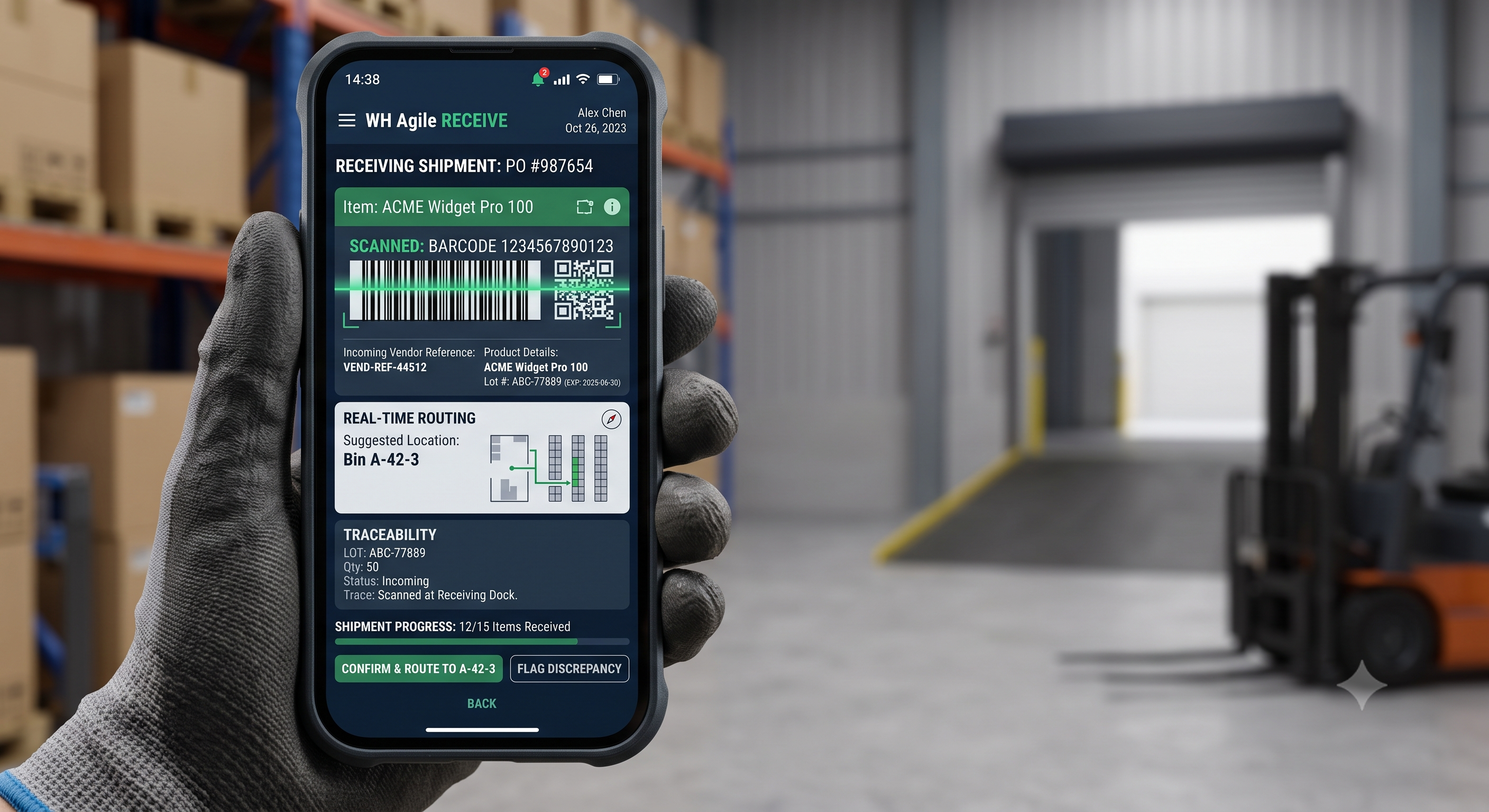
Recent Odoo releases continued refining these operational details. Improvements included replenishment processes, purchase-alternative comparisons, editable supplier arrival dates, location-based routing, packaged-goods handling, backorder decisions in Barcode, inventory-count entry, redesigned labels, and stronger purchase-order and vendor-bill matching.
These changes matter because inventory problems often begin before a product reaches the customer. A delayed supplier affects receiving. A receiving issue affects available stock. Stock availability affects fulfillment. Fulfillment affects delivery commitments. And eventually, the financial records need to reflect what happened.
For wholesale distribution, this connected flow is particularly important for managing complex multi-warehouse distribution operations involving multiple suppliers and customer commitments. For manufacturers, the same improvements can support component availability, purchasing, production inputs, labeling, and traceability.
For ecommerce businesses, inventory accuracy directly influences what customers see online and what the warehouse ultimately has to fulfill.
The Odoo 20 roadmap also previews further attention to areas such as perpetual inventory valuation, intercompany and interbranch inventory, allocation reporting, location-based routes, putaway rules, and product and inventory labels. These should be evaluated against the final Odoo 20 release before making planning decisions.
Ecommerce Is Becoming an Operational Conversation
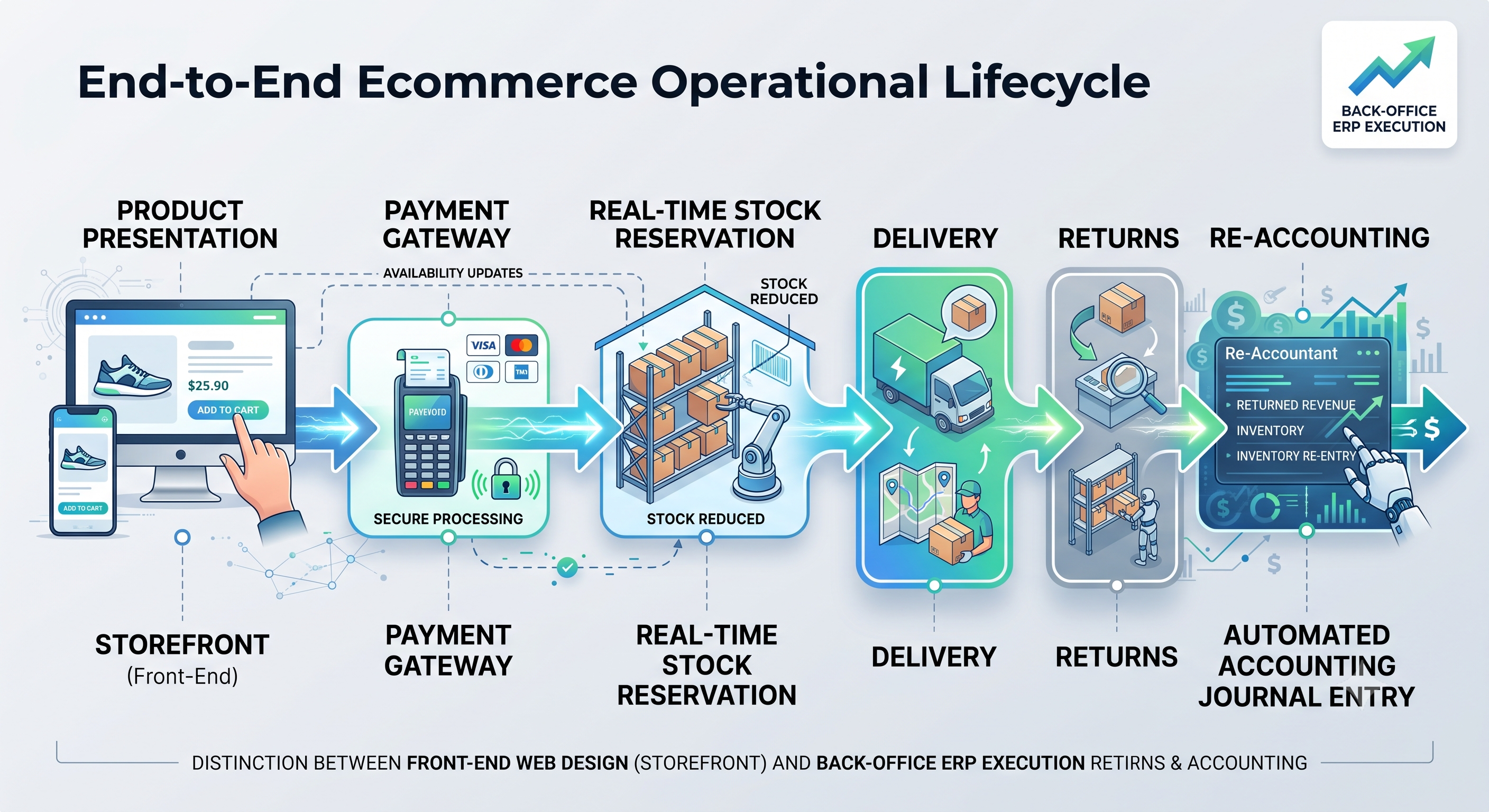
There was a time when ecommerce could be viewed primarily as a website project. Today, that approach creates a problem. A customer sees a product. They select a variant. They pay. The order enters fulfillment. Inventory changes. Purchasing may be triggered. The warehouse ships the product. A return may follow. Accounting records the financial transaction.
The customer sees a storefront. The business sees an entire chain.
Recent Odoo releases strengthened several links in that chain, including ecommerce order dashboards, standalone categories, sales controls, cross-sell suggestions, review requests, loyalty progress indicators, preferred delivery dates, product-variant presentation, packaging restrictions, ecommerce accounting configuration, product identifiers, and additional payment options.
The bigger story is the continuous connection across the entire lifecycle:
For wholesale distributors and direct-to-consumer brands, seamless B2B and B2C ecommerce integration supports dealer ordering, customer-specific product access, and account-based purchasing.
For manufacturers selling directly to customers or through distributors, ecommerce also creates a bridge between production capacity and customer demand.
The Odoo 20 roadmap continues to highlight ecommerce and website development, including areas such as catalog pages, return management, ecommerce dashboards, rating requests, website performance, AI assistance, structured data, portals, and forms.
Again, the important distinction is that these roadmap areas are signals of direction—not a substitute for reviewing the final release.
Making Every day Work Simpler—and Financial Information Stronger
Not every meaningful ERP improvement is something customers see. Some of the most important changes happen quietly in the background.
A warehouse employee needs information while working on the move. A finance team needs to identify a duplicate payment. An accountant needs better purchase order matching. A manager wants a dashboard that reflects the latest operational information.
Recent Odoo releases addressed this kind of everyday friction. Odoo introduced improvements to mobile access and offline functionality, while AI capabilities expanded to work with files and updated information. Other developments included AI-assisted document handling, call transcripts and summaries, improved dashboards and saved filters, duplicate detection, double-payment prevention, intercompany matching, payment initiation, bill-line prediction, purchase-order matching, and reconciliation controls.
The business value here is less about replacing people and more about reducing unnecessary effort.
A warehouse user may gain easier mobile access. An ecommerce team may work with clearer product and order information. Finance may have stronger controls around matching, reconciliation, and duplicate payments. Leadership may get a more consistent view of what is happening across the business.
AI is part of this evolution, but it should be viewed as assistance—not autonomous decision-making. Its practical value will still depend on data quality, configuration, controls, user adoption, and human review.
The Odoo 20 roadmap previews further AI development across areas such as accounting, websites, record creation and updating, and helpdesk. The final implementation and business value will become clearer with the actual release.
What Should Businesses Watch When Odoo 20 Arrives?
As Odoo 20 is unveiled, decisionmakers should resist the temptation to count features. Instead, look for answers to a smaller set of questions:
- Which confirmed capabilities address a problem we already have?
- Could new standard functionality replace a manual process, workaround, separate tool, or customization?
- Which roadmap areas actually made it into the final release?
- What custom modules, reports, integrations, or processes could be affected?
- What data preparation, testing, and training would be required?
- Would the right move be to implement, upgrade, optimize, prepare—or wait?
These questions turn a software release into a business evaluation.
The Bigger Signal Behind Odoo 20
Odoo 20 may bring new capabilities, but the more useful story is already visible.
The progression from Odoo 19.1 through 19.4 shows continued attention to connected operations: production and logistics, inventory and purchasing, ecommerce, financial control, mobile access, usability, and AI-assisted work.
That matters because businesses do not operate in application silos. A manufacturing decision can affect inventory. Inventory can affect ecommerce. Ecommerce can affect fulfillment. Fulfillment can affect accounting. And financial information ultimately affects management decisions.
The value of an ERP platform increasingly comes from how well these pieces work together. Odoo 20 will provide the next chapter.
The question is not “How many features does Odoo 20 have?”
It is:
“Which confirmed capabilities could meaningfully improve the way our business operates?”
We’ll be following the Odoo 20 unveiling on September 24 and sharing the most important updates as they’re confirmed.
Want to stay ahead of what’s changing?