
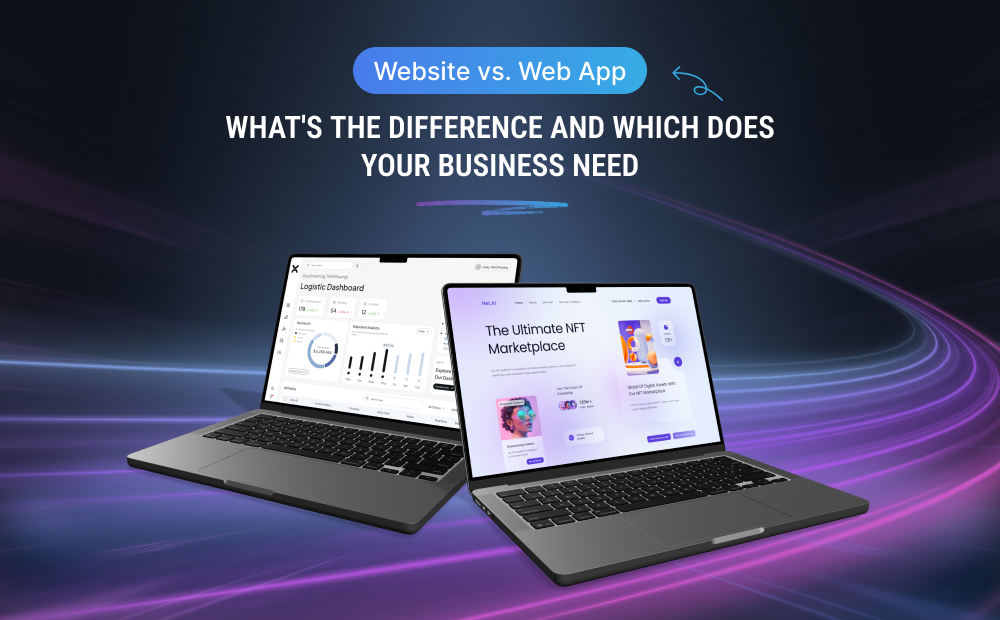
In today’s digital-first world, your online presence is often the first (and sometimes only) impression customers have of your business. Whether you’re a startup launching a SaaS product, a retail brand building an e-commerce store, a healthcare provider offering patient portals, or a service company delivering dashboards, the choice between a website and a web app can make or break user experience, growth, and revenue.
Research shows the stakes are high:
- Companies with interactive, personalized digital experiences see up to 20% higher conversion rates (Forrester, 2024).
- Businesses using web applications for customer portals report 35% faster customer onboarding and 25% lower support tickets (Gartner, 2025).
- Static websites still dominate organic traffic, but web apps drive 3× more user engagement time on average (Statista, 2025).
So how do you decide? Let’s break it down clearly.
What is a website?
A website is your digital storefront – a collection of interconnected pages that showcase who you are, what you offer, and why people should care. It’s built to inform, educate, and attract. These are typically published on at least one web server and identified with a common domain name. Websites have limited interactivity beyond displaying content. Only a website owner can add and edit content and deliver standard experience to the user who visits.
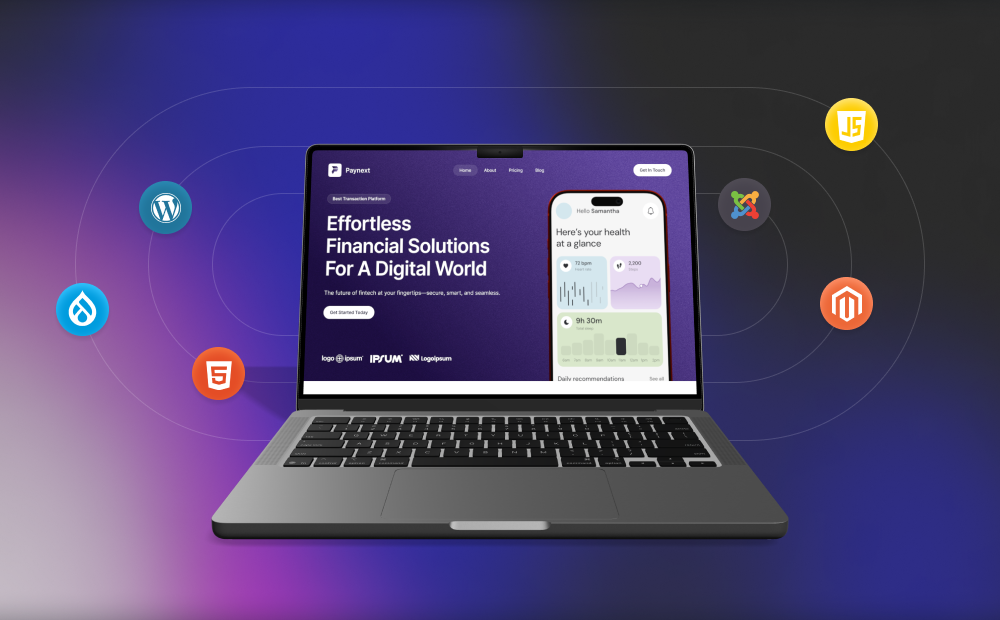
Primary Purpose of a Website
- Brand presence
- Product or service explanation
- Lead capture
- Marketing and SEO
- Sharing resources or content
- Informational discovery
Core Characteristics of a Website
- Low to moderate interactivity (reading, browsing, simple forms, chat widgets)
- Content-first design with strong SEO focus
- Lightweight backend (often CMS like WordPress or static generators)
- Audience intent: informational — visitors browse, learn, or research
Types of websites:
- Branding sites (company story & values)
- E-commerce (product catalogues & checkout)
- Informational (news, education, encyclopaedia’s)
- Blogs & portfolios (content showcase)
Websites excel at visibility: 92% of online experiences begin with a search engine (BrightEdge, 2025), and strong SEO still drives the majority of organic traffic.
What is a web application?
A web application, unlike a website, is software. Instead of content being the core, the experience is functional. It’s computer software accessed via a web browser, linked to a database. They adapt to the dimensions of the device they are open to and are responsive. The users of a web application can perform actions, manage data, collaborate, and interact with complex workflows.
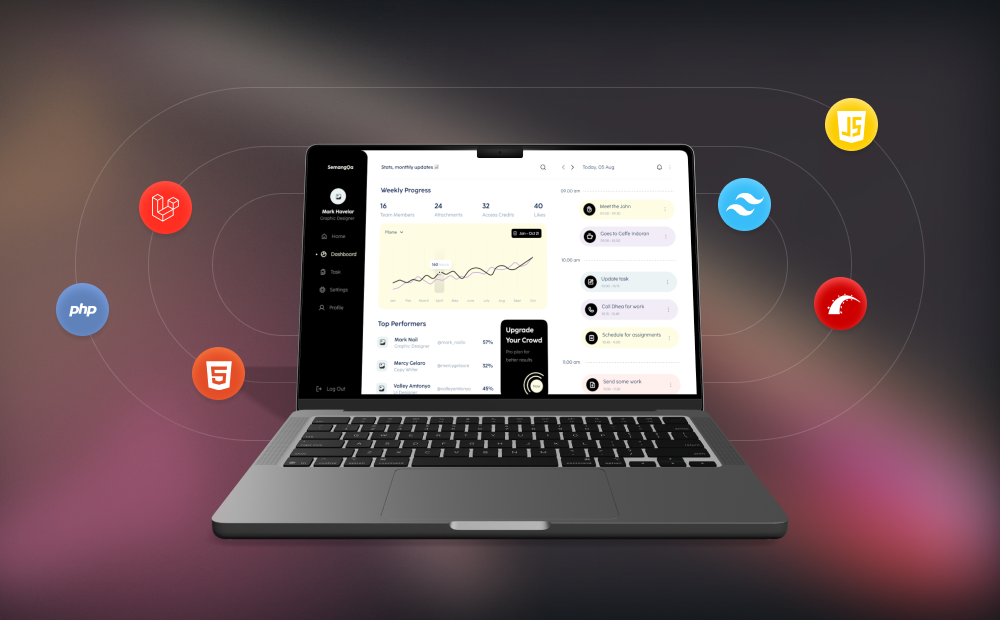
Primary Purpose of a Web App
- Enable workflows
- Replace or augment internal operations
- Deliver a SaaS product
- Process and manipulate data
- Provide user-specific functionality
- Automate business tasks
Characteristics of a Web Application
Lively Content: The content of a web application changes frequently, often in real-time, based on data updates.
Personalization: Web applications can tailor the user experience based on individual preferences, profiles, or roles.
Two-way Communication: Users can interact with the application by inputting data, making selections that affect the content or functionality.
High Interactivity: Web applications offer advanced interactive features.
Enhanced Security: Web applications typically employ various security measures to protect user information and prevent unauthorized access.
User Authentication: Many web applications require users to log in or authenticate themselves to access personalized or secured areas.
Data Storage and Manipulation: Web applications often involve storing, processing, and manipulating large amounts of data, either on the server side or the client side.
Types of web apps:
- Multi-Page Applications (MPAs) — reloads pages (e.g., online catalogs)
- Dynamic web apps — complex & interactive (e.g., dashboards, CRMs)
- Progressive Web Apps (PWAs) — installable, offline-capable, push notifications
- Single-Page Applications (SPAs) — fast, app-like feel (e.g., Gmail, Trello)
Web apps shine in engagement: users spend 3× more time on interactive platforms, and SaaS companies with web apps see 40% higher retention (Statista, 2025).
Industry Examples: Which One Do You Need?
- E-Commerce → Website for product pages & SEO + Web App for order tracking & customer dashboards
- Healthcare → Website for hospital info + Web App for patient portals & medical records
- Education → Website for course info + Web App for LMS & student dashboards
- Finance → Website for loan info + Web App for online banking & statements
- Real Estate → Website for listings + Web App for property management portals
- Hospitality → Website for gallery & amenities + Web App for booking engines
- SaaS → Website for marketing + Web App for the actual product
Many modern businesses choose both: a public-facing website for visibility and a secure web app for functionality. This hybrid model is now the standard for scalable companies.
Choose What’s best for your business?
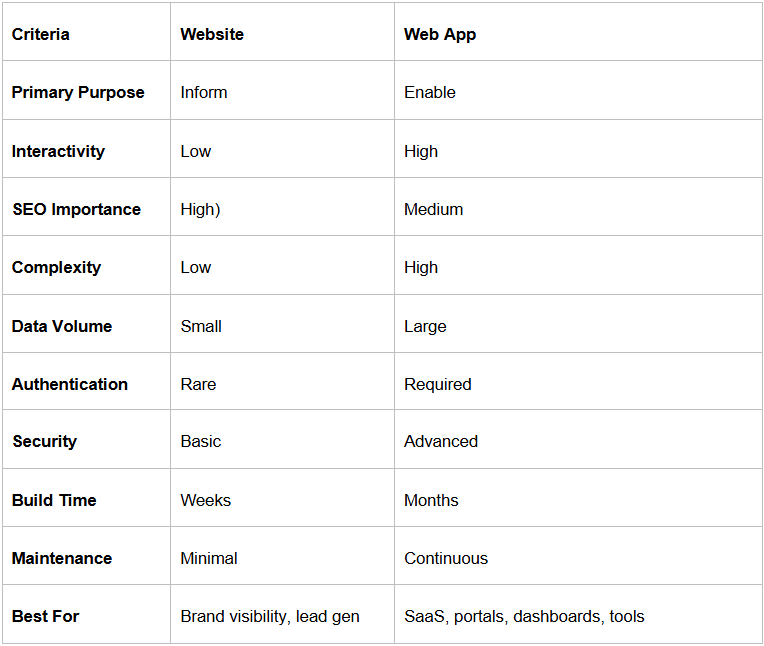
Conclusion: Make the Right Choice for Your Future Growth
A website and a web application are two distinct digital assets with different purposes. Choosing between a website and a web application is one of the most important digital decisions for your business. The only criteria for choosing between the two is the nature and purpose of your business. Your choice is a technical decision — it’s a strategic one that shapes how your customers experience your brand and how efficiently your team operates.
- Choose a website when visibility, education, and organic traffic matter most.
- Choose a web app when users need to perform tasks, manage data, or access personalized tools.
- Choose both when you want marketing reach and operational excellence — the model powering most successful digital businesses today.
Making the right choice ensures your digital foundation scales with your business. Whether you need strong SEO visibility, a customer focused application, or a hybrid ecosystem, the clarity you establish today, the understanding that you build now determines your product’s success and the future. At Confianz, we help businesses to build both — high-ranking websites that attract traffic and powerful web apps that deliver results. Whether you need a stunning brand site, a secure customer portal, or a full SaaS platform, our experienced team is ready to turn your vision into a scalable reality.
Ready to build the right digital solution for your business?
Confianz helps companies create high-performing websites and powerful web applications tailored to their goals. Talk to our experts today.